


Pet Dental Care Services
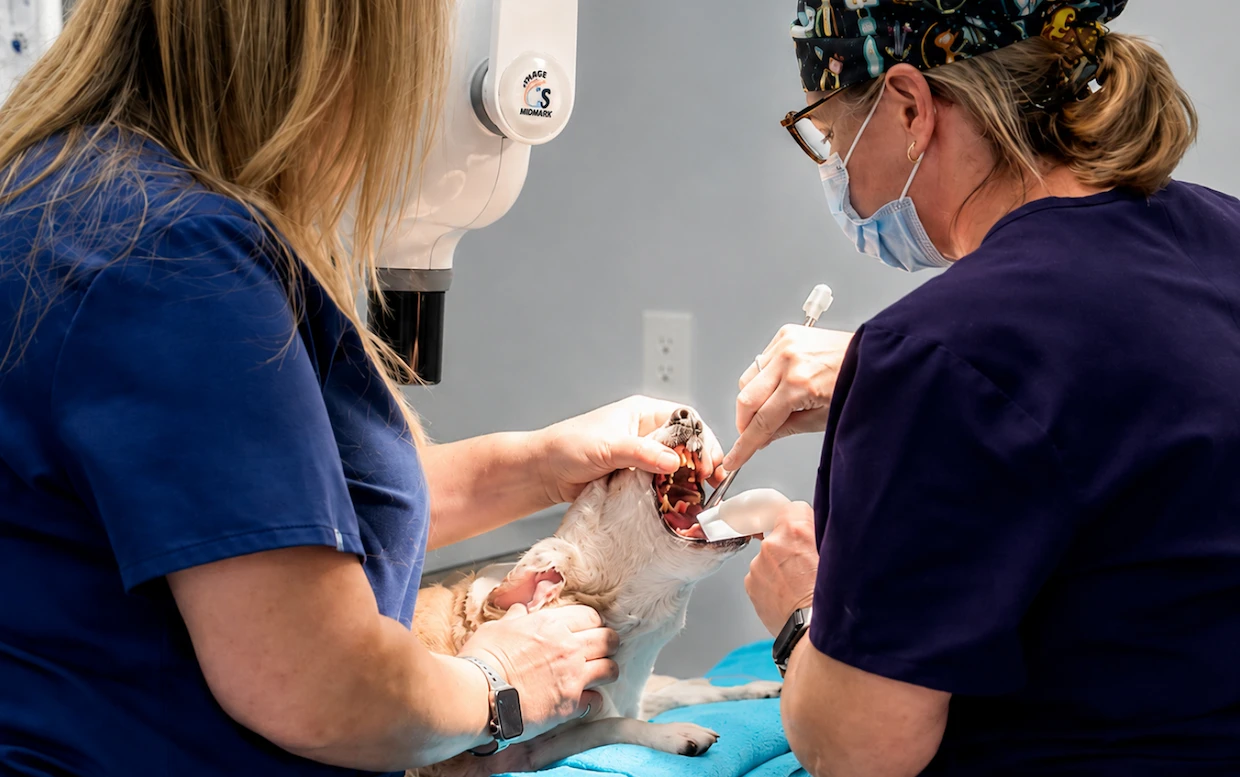
Dental disease is the most common health problem in adult dogs and cats. It is also one of the easiest to miss, because the early stages can develop out of sight, and pets are good at hiding mouth pain. If you have been searching for a dog dentist or a pet dentist in Toronto, what most pets actually need is professional veterinary dental care, and that is what our team provides. At York Veterinary Hospital, we offer complete dental care for dogs and cats, from routine exams and professional teeth cleaning to digital dental X-rays, extractions, and oral surgery. The aim is simple: find problems early, treat them properly, and keep your pet comfortable and free of dental pain.
Need an appointment?
Book a Dental Consultation for Your Pet Today
Why Dental Care Matters for Your Pet’s Health
Most dogs and cats show signs of dental disease by the age of three, often long before an owner notices anything is wrong. It starts quietly. Plaque forms on the teeth, hardens into tartar, and bacteria collect along and beneath the gumline. Over time, this becomes periodontal disease: inflamed and receding gums, infection in the tooth roots, and bone loss that loosens or destroys teeth.
The reason it matters goes beyond the mouth. Dental pain can change how your pet eats, plays, and behaves, even when they never cry out. Chronic oral infection has also been linked to problems affecting the heart, liver, and kidneys. Treating dental disease early, before it reaches the roots and bone, protects both your pet’s mouth and their overall health. This is one of the most valuable things you can do for a dog or cat.
Signs Your Pet Needs Dental Care
Pets rarely show obvious pain, so the warning signs are easy to overlook. Book a dental exam if you notice any of the following.
Bad Breath (Halitosis)
Persistent bad breath is the most common first sign of dental disease in both dogs and cats. A dog’s breath should not be foul, and a cat with a stinky breath is usually telling you that plaque, tartar, and gum disease are already underway. It is rarely “just doggie breath.”
Red, Swollen, or Bleeding Gums
Healthy gums are firm and pink. Gums that are red, swollen, or bleed easily are a sign of gingivitis, the early and still reversible stage of gum disease.
Difficulty Eating and Drooling
Watch for chewing on one side, dropping food, turning away from hard kibble or toys, or excessive drooling. These often mean a tooth or the gums have become painful.
Loose, Broken, or Missing Teeth
Loose, broken, discoloured, or missing teeth point to advanced disease or injury and should be examined promptly. Pawing at the mouth or new sensitivity around the face can be a clue too.
Our Dog & Cat Dental Services
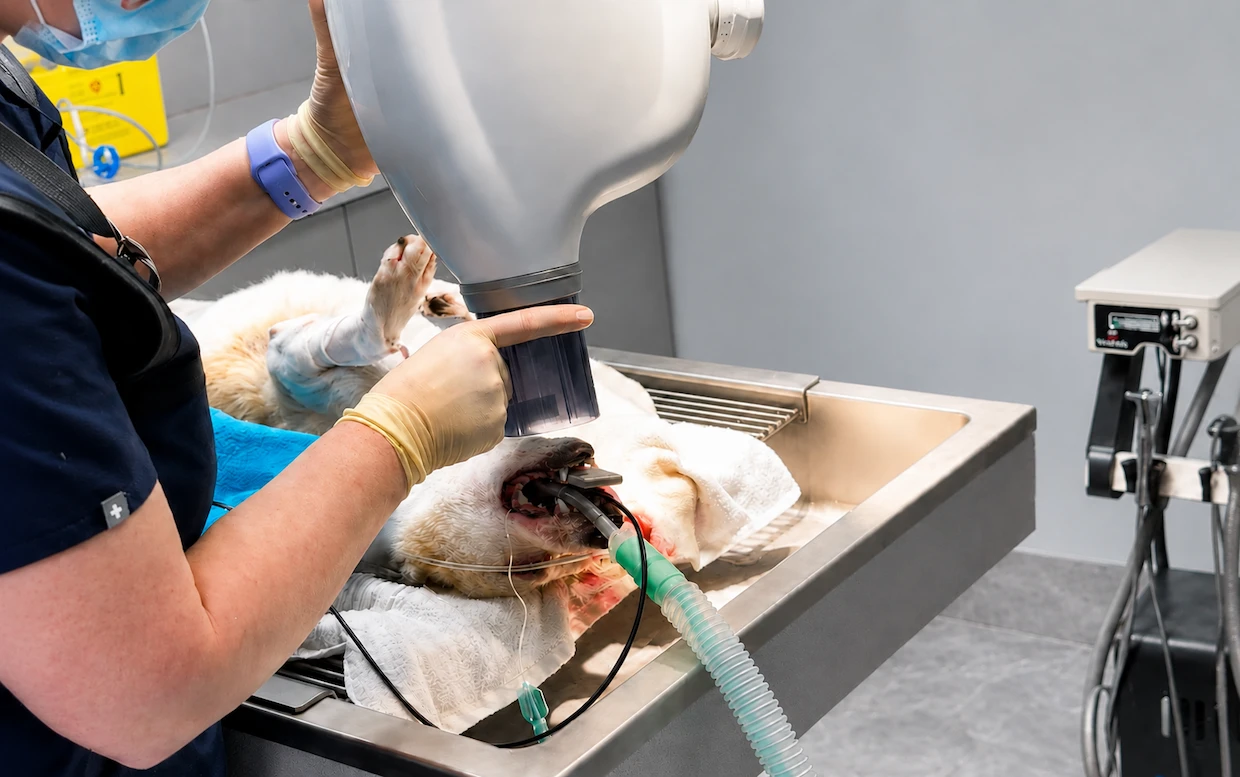
We provide full canine and feline dental care under one roof, so your pet can be examined, diagnosed, and treated in the same visit.
Comprehensive Dental Examinations
Every dental visit begins with a full assessment of your pet’s teeth, gums, and mouth, so we can grade the stage of any dental disease and plan the right treatment.
Professional Scaling & Polishing
We remove plaque and tartar from the whole tooth, including the surfaces beneath the gums where disease takes hold, then polish each tooth to leave a smooth finish that slows new buildup. Cleaning under the gumline is the part that actually treats gum disease, and it is something anesthesia-free cleaning cannot reach. This is the professional dental care many pet owners have in mind when searching for a dog dentist, performed safely under anesthesia and supported by dental X-rays.
Digital Dental X-Rays
Around 60 percent of every tooth sits below the gumline, hidden from view. Digital dental X-rays let us see root infection, bone loss, and damage that a visual exam alone would miss. Dental radiographs are a standard part of how we diagnose and treat your pet.
Tooth Extractions & Oral Surgery
When a tooth is too diseased or damaged to save, we remove it carefully and manage pain at every stage so your pet heals comfortably.
Anesthesia & Your Pet’s Safety
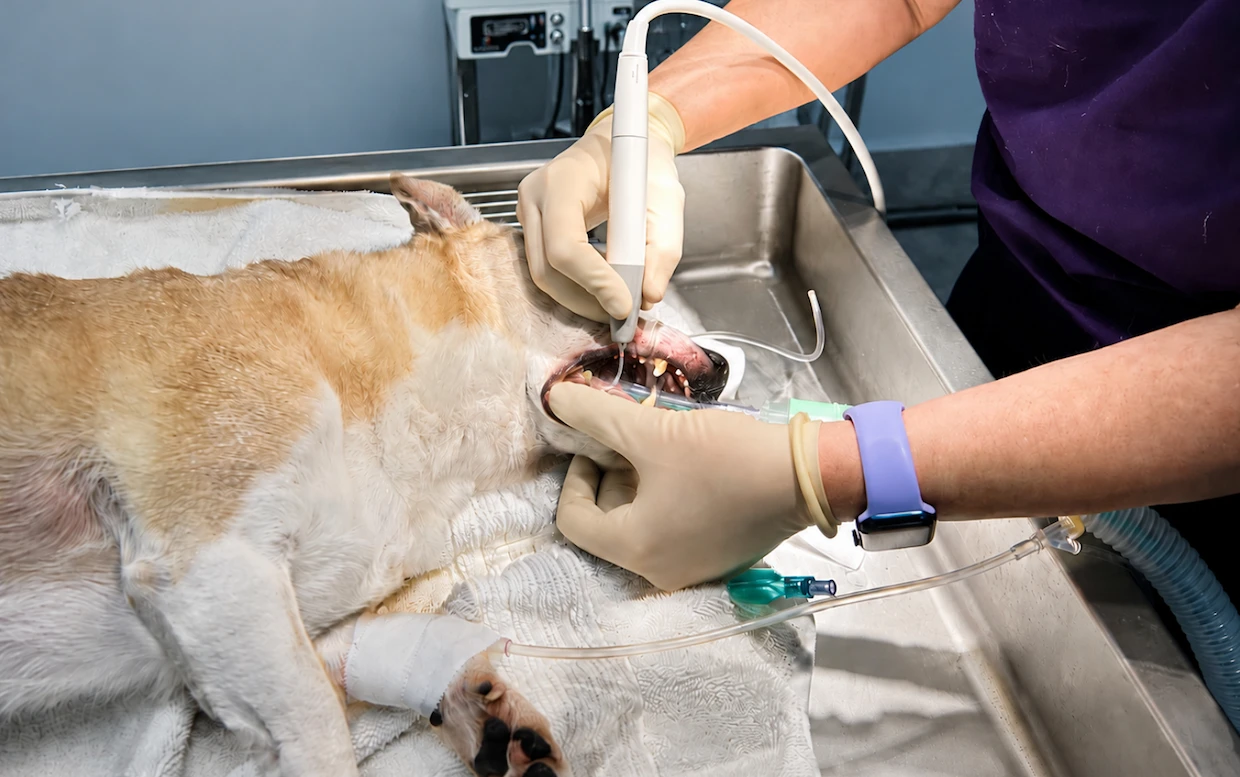
A proper cleaning means working beneath the gums and checking every surface of every tooth, and that can only be done safely and completely while your pet is under general anesthesia. Anesthesia-free cleaning can make the visible crown look whiter, but it reaches only the surfaces above the gums. It leaves the disease where it actually lives, under the gumline, and it does not allow the dental X-rays or tooth-by-tooth exam that protects your pet. For these reasons, the American Animal Hospital Association (AAHA) and the American Veterinary Dental College (AVDC) consider cleaning under anesthesia the standard of care.
We know anesthesia is the part that owners worry about most, so we take it seriously. Before a procedure, we recommend pre-anesthetic bloodwork to confirm your pet is a good candidate. During the cleaning, your pet is placed on an intravenous catheter with IV fluids running at a surgical rate throughout. A Registered Veterinary Technician monitors continuously using a multi-parameter unit that tracks heart rate, blood pressure, oxygen saturation, respiratory rate, capnograph readings, and ECG. Every step is built around bringing your pet through safely and calmly.
Dental Care by Life Stage
Puppies & Kittens
Puppy and kitten dental care is mostly about starting well: an early check of the bite and baby teeth, guidance on brushing at home, and monitoring as the adult teeth come in.
Adult Pets
Most adult dogs and cats do best with a professional cleaning about once a year, supported by home care in between. Your veterinarian will tailor the timing to your pet.
Senior Pets
Older pets often need closer monitoring and, in some cases, more frequent cleanings. We adapt the anesthetic plan and treatment to a senior pet’s age and health, so dental care stays safe at every life stage.
At-Home Dental Care Between Visits
Good oral hygiene at home is what keeps your pet’s teeth healthy between professional cleanings. The most effective habit by far is brushing with a pet-safe toothpaste, ideally daily, introduced slowly so your dog or cat learns to accept it. Starting young helps, so brushing your puppy’s teeth early pays off for life. If daily brushing is not realistic, dental chews, water additives, and dental diets that carry the Veterinary Oral Health Council (VOHC) Seal of Acceptance are a proven way to help control plaque and tartar. These are the home-care products tested to do what they claim. Pair them with regular checkups, and you have a simple plan to keep your dog’s teeth clean and your cat’s oral hygiene on track.
Why Choose York Veterinary Hospital
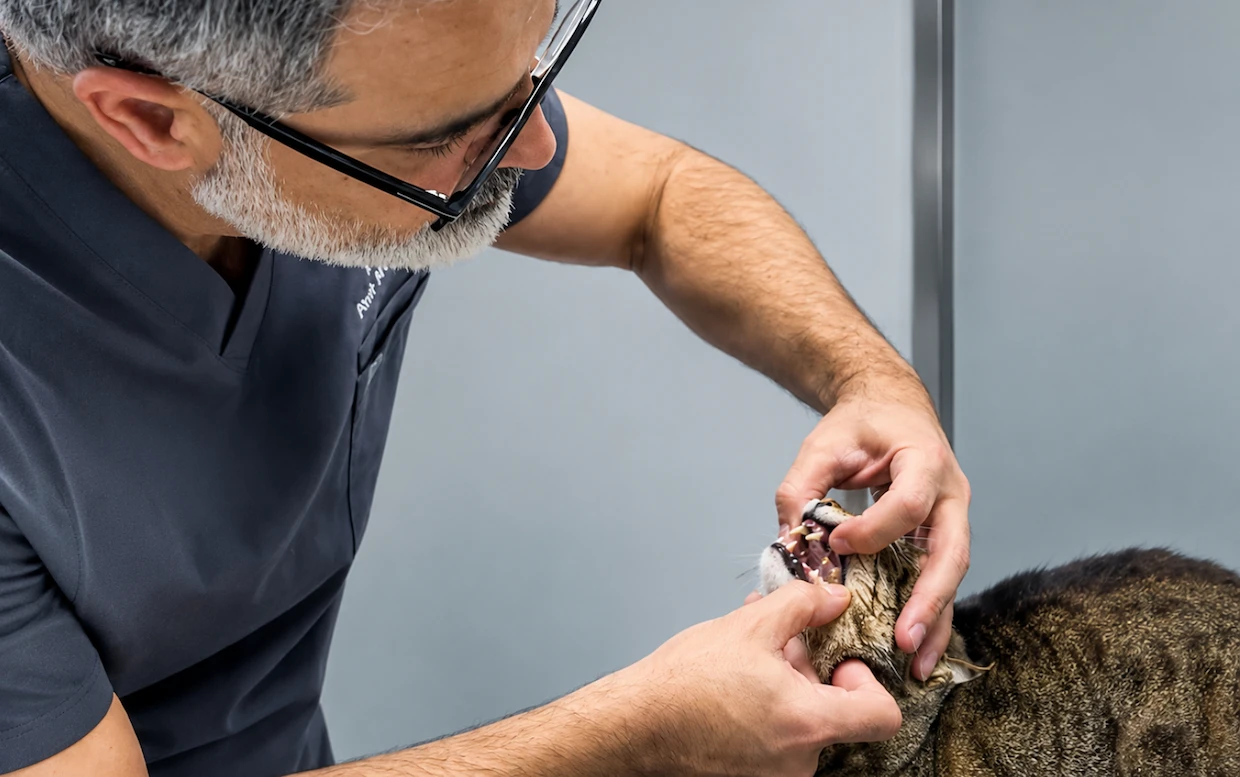
- An experienced veterinary team that treats nervous patients gently and manages complex dental conditions, not just routine cleanings.
- Advanced diagnostics, including digital dental X-rays, for an accurate diagnosis before any treatment.
- A comfort-first approach, with each procedure adapted to the individual pet to lower stress.
- Clear, upfront estimates, so you know what to expect before treatment begins.
- A team that families across Toronto and the GTA return to for careful, compassionate dental care.
Book Your Pet’s Dental Consultation Today
Frequently Asked Questions
How often does my dog or cat need a dental cleaning? Most pets benefit from a professional dental cleaning about once a year. Some small breeds, flat-faced breeds, and senior pets need more frequent care. Your veterinarian will recommend a schedule based on your pet’s exam.
Can you clean my pet’s teeth without anesthesia? Anesthesia-free cleaning only reaches the visible surfaces above the gums and misses the disease beneath them, where gum disease develops. It also does not allow dental X-rays or a complete tooth-by-tooth exam. Cleaning under anesthesia is the safest and most thorough approach, and it is what veterinary dental experts recommend.
What does a pet dental cleaning cost? Dental cleaning fees are set for dogs and set for cats, regardless of size or age. Dental X-rays also have a set cost. The final cost may increase if extractions are needed, depending on how many teeth must be removed and which teeth are involved. After the exam, we give you a clear estimate before any treatment goes ahead, so there are no surprises.
Why does my dog or cat have bad breath? Persistent bad breath is usually the first sign of plaque, tartar, and gum disease. If your pet’s breath has changed or worsened, it is worth booking a dental exam.
What are the signs of dental disease in pets? Common signs include bad breath, red or swollen gums, drooling, difficulty eating, and loose or discoloured teeth. Many pets show no clear signs at all, which is why regular exams matter.
How can I keep my pet’s teeth healthy at home? Brushing with a pet-safe toothpaste is the most effective step, supported by VOHC-accepted dental chews or water additives and regular veterinary checkups.