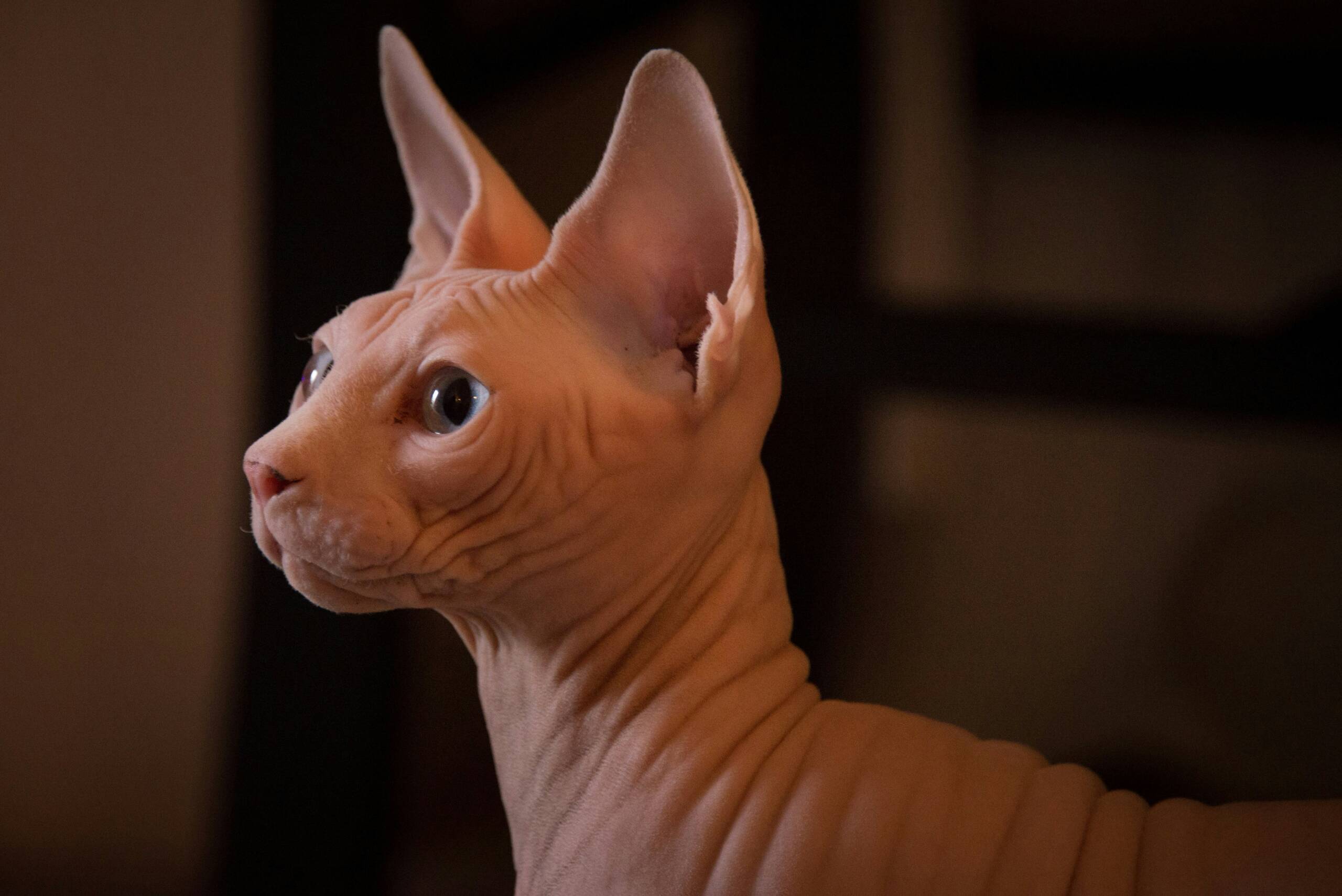
Hairless cats are among the most fascinating and recognizable felines in the world. Their smooth, nearly hairless skin, large ears, and expressive eyes give them a unique appearance that many cat lovers find irresistible. While some people first notice their unusual look, those who own them often discover that these cats are also affectionate, playful, and deeply social companions.
Hairless cats require special care compared to typical cats with fur, especially when they are kittens.
In this guide, we will explore the most popular hairless cat breed types, how to care for hairless kittens, and what potential owners should know before bringing one home.
What Is a Hairless Cat?
A hairless cat is a feline that naturally lacks a traditional coat of fur due to a genetic mutation. While these cats appear completely bald, many actually have a very fine layer of fuzz that feels similar to suede or peach skin.
Hairlessness in cats occurs because of genes that affect hair follicle development. Contrary to common belief, hairless cats are not artificially bred to remove fur. Instead, the trait originated from natural mutations that were later selectively bred to create stable hairless breeds.
Hairless cats differ from typical kittens in several ways:
- Their skin produces natural oils that are usually absorbed by fur in other cats.
- They may require regular bathing to remove oil buildup.
- They are more sensitive to temperature changes.
- Their skin may need protection from strong sunlight.
Because of these factors, proper grooming and regular veterinary checkups are especially important for maintaining healthy skin.
Hairless Cat Breeds
Several recognized hairless or nearly hairless cat breeds exist today. Each breed has unique physical characteristics, personalities, and care needs.
Sphynx
The Sphynx is the most well-known hairless cat breed, and often the first breed people think of when discussing bald cats.
Originating in Canada during the 1960s, the Sphynx developed from a natural genetic mutation that caused kittens to be born without fur. Over time, breeders carefully developed the breed while maintaining strong health standards.
Sphynx cats are known for:
- Extremely affectionate personalities
- High intelligence and curiosity
- Strong attachment to their owners
- Energetic and playful behaviour
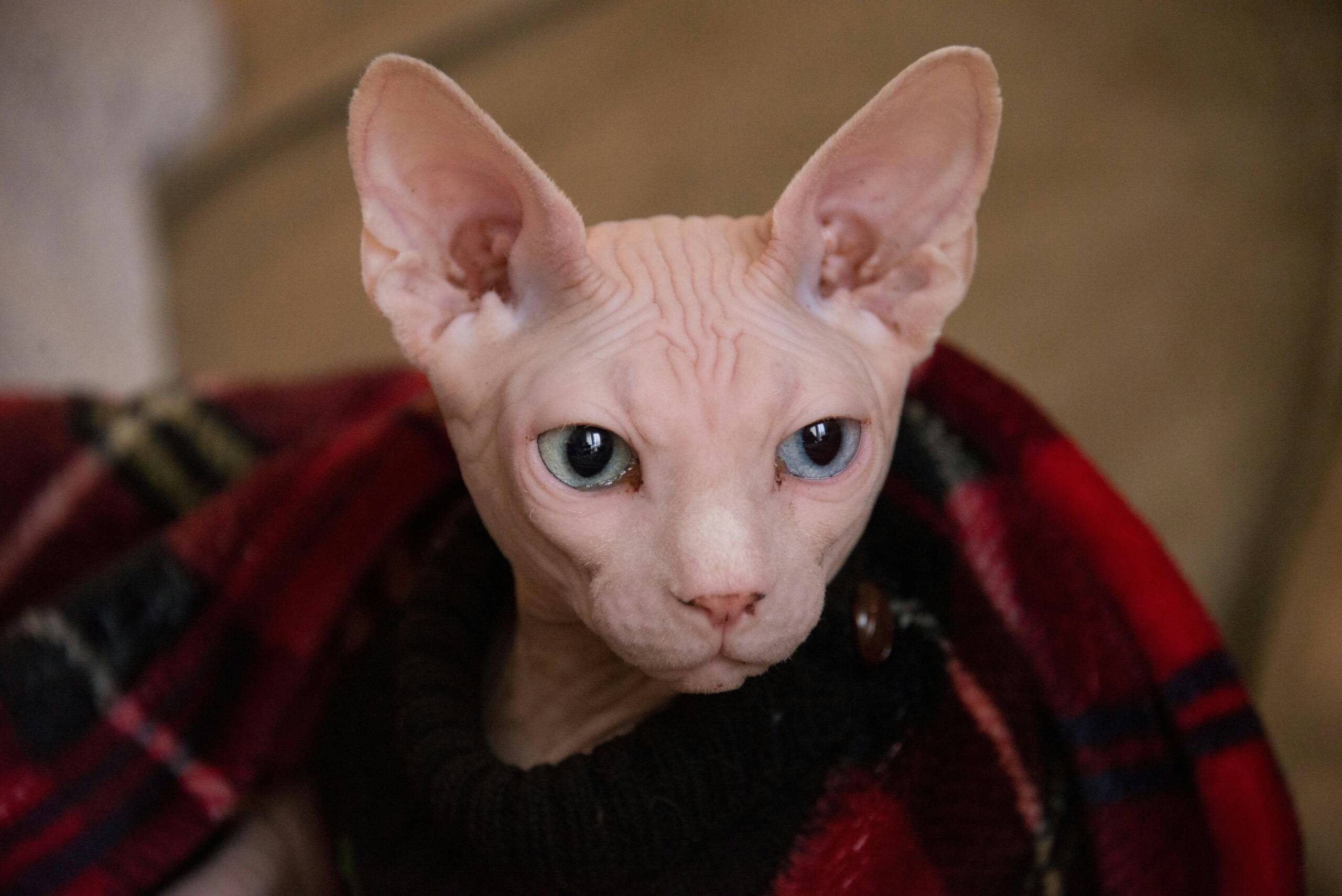
Because they lack fur, Sphynx cats require regular skin cleaning and warmth. Many owners provide cozy blankets, heated beds, or sweaters during colder months.
Peterbald
The Peterbald originated in Russia in the 1990s through a cross between the Donskoy and Oriental Shorthair breeds.
Unlike some hairless cats, Peterbald cats may have different coat types, including:
- Completely bald
- Fine peach fuzz
- Short velour-like fur
- Light brush coats
Peterbald cats are elegant and slender with large ears and long limbs. Their temperament is typically friendly, intelligent, and social. They often enjoy interacting with people and other pets.
Due to their thin skin and lack of fur, Peterbald cats may require extra warmth and gentle skincare.
Don Sphynx (Donskoy)
The Don Sphynx, also known as the Donskoy, is another Russian breed. Although it looks similar to the Sphynx, the genetics behind hairlessness are different.
Key characteristics include:
- Strong and muscular body
- Wrinkled skin
- Almond-shaped eyes
- Loyal and affectionate personality
Donskoy cats may lose their hair gradually as kittens or be born nearly bald. They are known for forming strong bonds with their owners and often enjoy being held or cuddled.
Because of their exposed skin, regular cleaning of skin folds and ears is essential.
Elf Cat
The Sphynx and the American Curl were combined to form the relatively new breed known as the Elf Cat. This results in a hairless cat with distinctive curled ears.
Elf cats are known for:
- Their unique ear shape
- Friendly and playful temperament
- High intelligence and curiosity
Although still rare, this breed is growing in popularity among cat enthusiasts who appreciate unusual feline features.
Other Variants
Several other less common hairless or partially hairless cats exist, including:
- Bambino – a cross between Sphynx and Munchkin cats
- Dwelf – a dwarf hairless cat with curled ears
- Ukrainian Levkoy – recognized by folded ears and hairless skin
While these breeds may vary in appearance, all hairless cats share similar care requirements related to skin, warmth, and grooming.
Veterinary professionals often recommend regular wellness checks for hairless cats because their skin, ears, and teeth require consistent monitoring.
Kitten Hairless Cat: What to Know
Caring for a hairless kitten can be slightly different from caring for a typical kitten.
Hairless kittens grow quickly and may have higher energy levels and metabolism. Because they lack fur, they use more energy to maintain body temperature.
Key care considerations include:
Feeding
Hairless kittens may require slightly higher calorie intake due to their metabolism. A veterinarian can recommend balanced kitten food that supports growth and energy needs.
Warmth
Hairless kittens are more sensitive to cold environments. Owners should provide warm sleeping areas, blankets, and safe heated beds.
Socialization
Like most kittens, hairless cats benefit from early social interaction. Positive experiences with people, sounds, and environments help them develop confident personalities.
Skin Care
Hairless kittens produce natural skin oils that need occasional cleaning. Gentle baths using vet-approved shampoo may be recommended every few weeks. It is also important to monitor the skin for irritation or redness.
Veterinary Visits
Early veterinary visits help ensure kittens are growing properly and receiving essential vaccinations.
At York Veterinary Hospital, we offer kitten wellness exams, vaccinations, and preventive care that help new pet owners establish a healthy routine for their kitten.
Caring for a Hairless Cat
Hairless cats require a consistent grooming and care routine.
Skin Cleaning
Because oils accumulate on the skin, many hairless cats benefit from bathing every 2-4 weeks. Mild pet-safe shampoos should be used to prevent irritation.
Nail and Ear Care
Hairless cats often produce more earwax because there is no fur inside the ears to absorb oils. Regular ear cleaning helps prevent buildup and infections.
Nail trimming is also important, as oils can collect around the nail beds.
Temperature Comfort
Without fur insulation, hairless cats seek warmth. Many enjoy heated beds, sunny windows, or soft clothing designed for cats.
Preventive Health Care
Routine veterinary checkups are important for monitoring skin health, dental care, and overall wellness.
Our veterinarians at York Veterinary Hospital can provide guidance on grooming routines, nutrition, and preventive healthcare for hairless breeds.
Choosing the Cutest Hairless Cat: Popular Picks
When people search for the cutest hairless cat, they often focus on features such as:
- Large expressive eyes
- Oversized ears
- Wrinkled skin
- Unique body shapes
Sphynx kittens are often considered among the cutest due to their playful personalities and curious expressions. Peterbald kittens may appeal to those who prefer a more slender, elegant appearance.
Ultimately, “cutest” is subjective. Many owners find that personality and emotional connection matter far more than appearance.
Pros and Cons of Owning a Hairless Cat
Before adopting a hairless cat, it is helpful to understand both the advantages and responsibilities.
Pros
- Very affectionate and social personalities
- Unique appearance that many people love
- Minimal shedding around the home
Cons
- Regular bathing and skin care are required
- Sensitive to cold temperatures
- Ear cleaning and dental care are needed more frequently
Veterinary professionals can help new owners prepare for the specific needs of hairless cats.
Tips Before Adopting a Hairless Cat
If you are considering bringing a hairless cat into your home, preparation is important.
Research Breeders and Rescues
Look for responsible breeders or adoption organizations that prioritize health and ethical breeding practices.
Prepare Your Home
Provide warm bedding, gentle grooming supplies, and quality nutrition before your kitten arrives.
Schedule the First Veterinary Visit
A comprehensive first checkup ensures your kitten receives vaccinations, parasite prevention, and an overall health evaluation.
We can assist new owners with the initial phases of caring for a hairless kitten and provide all-inclusive kitten care services.
Hairless cats are fascinating companions known for their affectionate personalities, unique appearance, and strong bonds with their owners. From the well-known Sphynx to elegant Peterbalds and rare Elf cats, hairless cat breeds offer a distinctive pet ownership experience.
However, their lack of fur means they require dedicated skin care, warmth, and regular veterinary attention.
If you are considering adopting a hairless kitten or already care for one, our veterinary professionals can help ensure your cat remains healthy, comfortable, and well cared for throughout every stage of life.