If you’ve ever winced at a “fishy” kiss from your canine companion, you’ve encountered the first sign of a much more profound health issue. While many owners dismiss “dog breath” as a normal part of pet ownership, it is actually the primary symptom of periodontal disease, the most common clinical condition in adult dogs.
Dental care is far more than a cosmetic fix for pearly whites. It is a fundamental pillar of your dog’s overall longevity and quality of life. Without regular intervention, oral bacteria can lead to chronic pain and even life-threatening systemic infections.
At Yorkshire Veterinary Hospital (your trusted partner in Colorado Springs), we believe that a healthy mouth is the gateway to a healthy life. This guide will walk you through everything you need to know about professional cleanings, at-home care, and the investment required to keep your pup smiling.
Why Dog Teeth Cleaning Matters
Oral health is inextricably linked to systemic health. Within hours of eating, a dog’s mouth starts to develop plaque, a soft layer of bacteria. If not brushed away, it reacts with minerals in saliva to harden into tartar (calculus) within days.
The Path to Periodontal Disease
Once tartar forms, it provides a rough surface for even more bacteria to latch onto, eventually migrating under the gumline. This triggers an inflammatory response known as periodontal disease.
- Heart and Kidneys: Bacteria under the gums can enter the bloodstream (bacteremia), traveling to major organs.
- Nutrition: Dental pain is a leading cause of “picky eating.” Dogs with infected teeth may drop food, chew on one side, or stop eating hard kibble entirely.
Signs Your Dog Needs Help
- Halitosis: Persistent bad breath that doesn’t go away.
- Discoloration: Yellow or brown buildup, especially on the back molars.
- Gingivitis: A thin red line along the gums or bleeding when chewing.
- Behavioural Changes: Pawing at the face or reluctance to have their muzzle touched.
What Happens During a Professional Dental Cleaning?
A professional cleaning at a clinic like Yorkshire Veterinary Hospital is vastly different from a human dental appointment. Because dogs won’t “open wide” for a scaler, the process is a detailed medical procedure involving several safety-critical steps.
1. Pre-Clean Exam & Bloodwork
Before any procedure, veterinarians perform a physical exam and recommend pre-anesthetic bloodwork. This ensures your dog’s liver and kidneys are healthy enough to process the anesthetic medications.
2. Anesthesia & Safety
Anesthesia is non-negotiable for a thorough cleaning. It allows the vet to:
- Clean subgingivally (under the gumline), where 80% of dental disease lives.
- Take X-rays safely without the dog moving.
- Maintain a clear airway using an endotracheal tube.
3. Scaling & Polishing
Vets use ultrasonic scalers to vibrate tartar off the tooth surface. Once the teeth are clean, they are polished. Scaling leaves microscopic scratches on the enamel; polishing buffs these out so bacteria have a harder time re-attaching.
4. X-Rays & Extractions
Digital dental X-rays are the only way to see what’s happening beneath the surface. If a tooth is found to have “resorption” or a root abscess, an extraction may be necessary to remove the source of pain.
Cost for Dog Dental Cleaning
The cost of a dental cleaning is usually not a “flat fee” because every mouth is different. In 2026, pet owners can expect a range of factors to influence the final bill.
Factors Influencing Price
- Size & Breed: Larger dogs require more anesthetic and supplies. Conversely, small breeds (like Yorkies or Poodles) often have “crowded” mouths that trap more tartar and require more intricate work.
- Extent of Disease: A “Grade 1” cleaning (minor plaque) is significantly cheaper than a “Grade 4” procedure involving multiple extractions and oral surgery.
- Location: Clinics in high-cost urban areas typically have higher overhead.
Typical Price Ranges
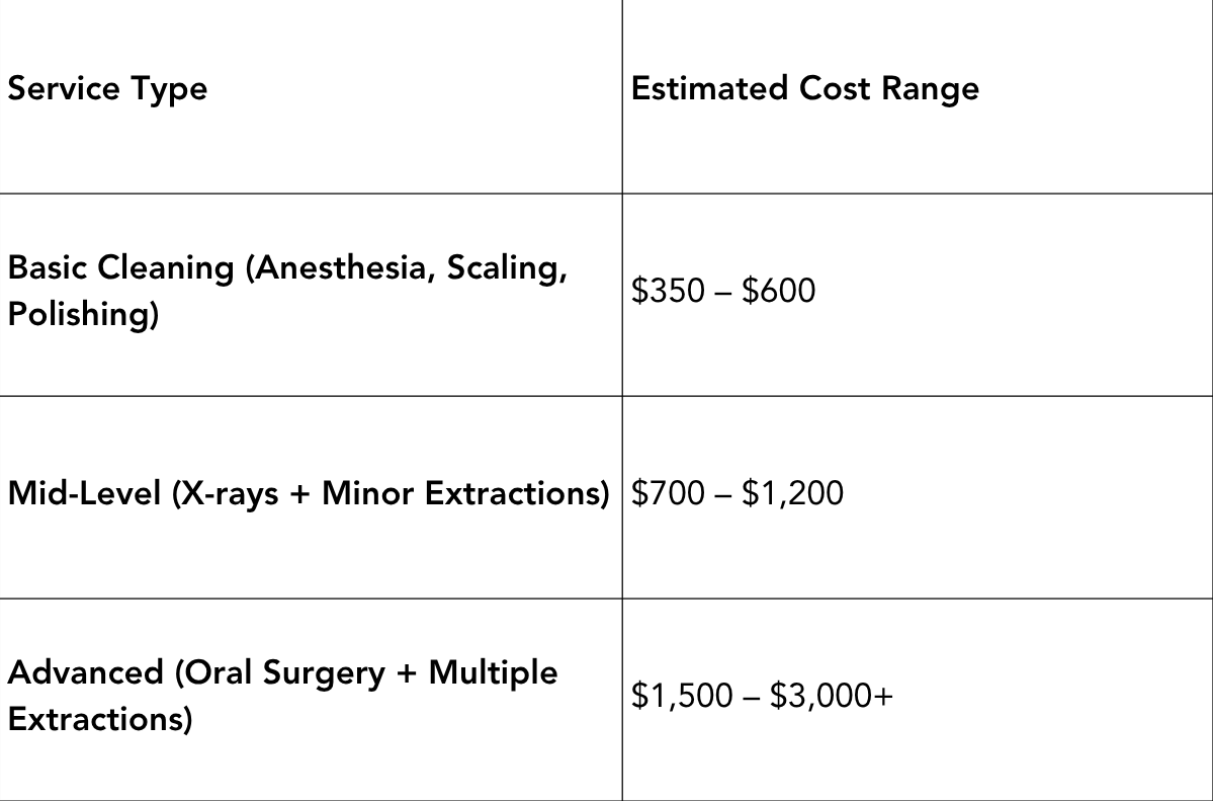
Note: For a precise estimate tailored to your pet’s specific needs, we encourage you to contact us for a dental consultation.
At-Home Dental Care for Dogs
The best way to extend the time between professional cleanings is a consistent home routine.
Taking care of your dog’s teeth at home is the best way to prevent painful extractions and stretch the time between professional visits. Think of it like this: your vet provides the “deep clean” (like your dental hygienist), but you provide the daily maintenance.
Here is how to build a high-impact at-home dental routine:
1. Daily Brushing (The Gold Standard)
Brushing is the most effective way to remove plaque before it hardens into tartar.
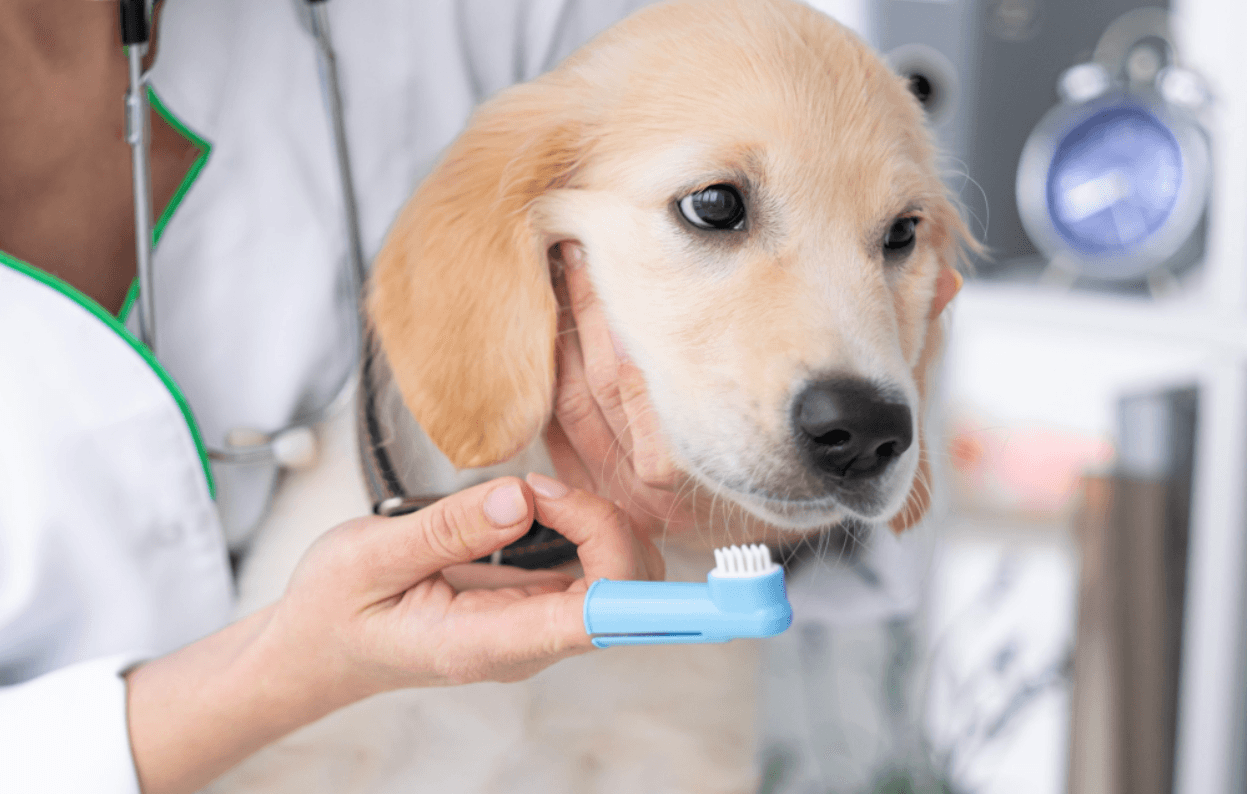
- The Tools: Use a soft-bristled brush or a finger brush.
- Crucial: Never use human toothpaste. It contains Xylitol (toxic to dogs) and foaming agents that can cause stomach upset. Dog-specific toothpaste is enzymatic and comes in flavors like peanut butter or poultry.
- The Technique: Focus on the outside of the teeth (the cheek side). You don’t need to force the mouth open; most plaque builds up where the lip touches the tooth.
2. Strategic Dental Chews
Not all treats are created equal. When choosing a chew, look for those specifically designed for mechanical plaque removal.
- Quality Matters: Choose chews that are firm enough to scrub the teeth but have enough “give” so they don’t break a tooth.
- Pro Tip: Ask the team at York Veterinary Hospital during your next visit for a list of products we trust and use for our own pets.
3. Dental Water Additives
If your dog won’t tolerate a toothbrush, water additives are a great “passive” defense. These tasteless, odorless liquids are added to your dog’s water bowl to help break down the biofilm and reduce the bacterial load in the mouth every time they take a drink.
4. Special Dental Diets
For dogs prone to rapid buildup, we may recommend a prescription dental diet. These kibbles are larger and have a specific fibrous texture that doesn’t shatter when bitten; instead, the tooth sinks into the kibble, allowing the fibres to scrub the surface like a mini-toothbrush.
5. Regular Home Inspections
Once a week, perform a “flip the lip” check. Look for:
- Redness along the gumline.
- New brown or grey spots on the teeth.
- “Stinky” spots that smell worse than usual.
Note: If your dog already has thick, stony tartar, brushing will not remove it, only a professional scaling can. Once we’ve cleared the slate at York Veterinary Hospital, these at-home steps will keep that smile fresh!
Your dog’s smile is a window into their overall health. While the prospect of anesthesia and the cost of professional cleaning can feel daunting, the alternative, chronic pain and systemic organ damage, is far more costly in the long run.
By combining professional care at Yorkshire Veterinary Hospital with a dedicated at-home brushing routine, you aren’t just giving your dog better breath; you’re giving them a longer, happier life.
Ready to freshen up that pup’s smile? Contact us today to schedule a dental assessment.
FAQs
Does my dog really need anesthesia for a cleaning?
Yes. “Anesthesia-free” cleanings are purely cosmetic; they can’t reach the bacteria under the gumline where 80% of dental disease lives. Anesthesia allows us to clean deeply and take X-rays safely, ensuring your dog is pain-free and still during the process.
Can’t I just use human toothpaste?
No. Human toothpaste contains foaming agents that upset dog stomachs and xylitol, an artificial sweetener that is toxic to dogs. Always use a pet-specific enzymatic toothpaste, which is safe to swallow and comes in flavours like beef or poultry.
Does pet insurance cover dental care?
Most standard plans cover “accidental” dental (like a broken tooth), but routine cleanings usually require a wellness add-on. It is best to check your specific policy for “preventative dental” coverage.
At what age should dental care start?
You should begin at-home brushing as a puppy. Professionally, most dogs need their first cleaning between ages 2 and 4, though smaller breeds often require care as early as 1 year old due to tooth crowding.
How long is the recovery?
Most procedures take 1–2 hours, and dogs almost always go home the same day. If extractions were performed, we may recommend soft food for about a week; otherwise, they can usually return to their normal routine the next morning.
Are some breeds more prone to dental issues?
Yes. Toy breeds (Yorkies, Chihuahuas) and “flat-faced” breeds (Pugs, Bulldogs) have crowded mouths that trap food and bacteria easily. These dogs often need more frequent professional cleanings than larger breeds.
Is it time for a check-up?
Don’t wait for your dog to show signs of pain. Contact York Veterinary Hospital today to schedule a dental assessment and keep your pet’s smile healthy!