Choosing the right diet for your cat is one of the most significant decisions you’ll make as a pet owner. With endless rows of colourful bags and cans at the store, it’s easy to feel overwhelmed. Ultimately, the “best” food isn’t just about the label; it’s about balancing nutrition, hydration, lifestyle, and your cat’s specific health needs.
At York Veterinary Hospital, we believe that informed owners raise the healthiest pets. Whether you’re a new kitten parent or a seasoned senior cat owner, this guide will help you navigate the great debate: wet vs. dry.
What Is Wet Cat Food?
Wet cat food is typically sold in cans, trays, or pouches. Its defining characteristic is its high moisture content, usually around 70% to 80% water.
Nutrient Profile & Benefits
- High Hydration: The moisture mirrors the natural prey-based diet of wild felines.
- Protein-Forward: Many wet foods are higher in protein and lower in carbohydrates compared to kibble.
- Rich Aroma: The moisture and fats make it highly aromatic, which is essential for cats, who rely heavily on smell to stimulate appetite.
Where it benefits cats: Wet food is a superstar for cats who struggle to drink enough water, seniors with dental pain, or “picky eaters” who need a more flavourful meal.
What Is Dry Cat Food?
Extrusion is the method used to create dry food, or kibble. It has a very low moisture content, typically around 10%.
Nutrient Profile & Benefits
- Convenience: It stays fresh in the bowl much longer than wet food, making it ideal for “free-feeding” or using automated dispensers.
- Caloric Density: Because the water is removed, kibble is energy-dense, providing many calories in a small volume.
- Dental Texture: The mechanical scraping of some dry kibbles can help reduce plaque buildup, though it is not a substitute for professional cleaning.
Where it benefits cats: Busy owners appreciate the cost-effectiveness and ease of storage that dry food provides. It is also useful for active cats who require high caloric intake to maintain their weight.
Key Differences: Wet vs. Dry Cat Food
1. Moisture Content & Hydration
- Wet Food: High in moisture, which helps keep cats hydrated. This can be especially helpful for cats that have urinary or kidney issues. We often emphasize the importance of hydration for urinary health.
- Dry Food: Contains little to no moisture, which means that owners need to encourage their cats to drink more water. Cats that eat dry food may be at higher risk for dehydration.
Nutritional Composition
- Wet Food: Typically higher in protein, lower in carbs, and contains essential fatty acids. This makes it a good choice for active cats or those needing weight management.
- Dry Food: Often higher in carbohydrates, making it more calorie-dense. This can be suitable for cats with regular appetites but may contribute to weight gain if not portioned carefully.
Palatability & Appetite
- Wet Food: More appealing to picky eaters due to its aroma and moisture content. Cats that are hesitant to eat dry food may find wet food more enticing.
- Dry Food: While not as palatable to finicky eaters, it works well for cats with a healthy appetite who prefer crunchy textures.
Convenience & Cost
- Dry Food: Convenient for free-feeding, as it’s easy to store and doesn’t spoil quickly. It’s also more affordable, making it a popular choice for many pet owners.
- Wet Food: Requires more frequent servings and careful storage to prevent spoilage. It may be more expensive than dry food, but it offers distinct benefits in terms of hydration and taste.
Health Considerations for Cats
Weight Management
Obesity is a common feline health struggle. Because dry food is so calorie-dense, it is very easy to overfeed. Wet food allows for larger portions with fewer calories, helping your cat feel “full” while maintaining a healthy weight.
Dental Health
While some believe dry food “brushes” teeth, most cats swallow kibble whole, or it shatters too easily to provide real benefit. We suggest that while some dental-specific kibbles help, regular veterinary checkups and professional cleanings are the only way to truly manage oral health.
Urinary & Kidney Health
Cats are prone to Chronic Kidney Disease (CKD) and Feline Lower Urinary Tract Disease (FLUTD). A moisture-rich diet helps flush the kidneys and dilute urine, preventing the formation of painful stones or crystals. This is why many vets recommend at least some wet food for male cats, who are at higher risk for urinary blockages.
Can You Feed a Mix of Both?
Absolutely! A mixed feeding approach is often the “sweet spot” for many households.
- The Best of Both Worlds: You get the hydration of wet food and the convenience/cost-savings of dry food.
- Portion Control: To avoid weight gain, you must calculate the total calories. Don’t just add a can of wet food on top of a full bowl of kibble; replace a portion of the dry with the wet.
- Vet Tip: The experts at York Veterinary Hospital recommend feeding wet food at specific mealtimes (morning/night) and using a measured amount of dry food in a puzzle feeder for mental stimulation during the day.
How to Choose the Best Food for Your Pet
- Read the Label: Look for a high-quality animal protein (chicken, turkey, fish) as the first ingredient.
- Monitor Your Cat: Watch for a shiny coat, clear eyes, and consistent energy levels.
- Check the Litter Box: Stool should be firm and consistent; excessive urination or straining requires a vet visit.
- Partner with a Professional: Work with us to evaluate your cat’s Life Stage and Health Profile.
When it comes to wet vs. dry food, there is no “one size fits all” answer. Wet food excels at hydration and weight control, while dry food offers unparalleled convenience and energy.
The best diet is the one that keeps your cat at an ideal weight, supports their organ health, and fits your lifestyle. If you’re unsure which path to take, contact us today for a personalized nutritional consultation!
Sample Feeding Guides
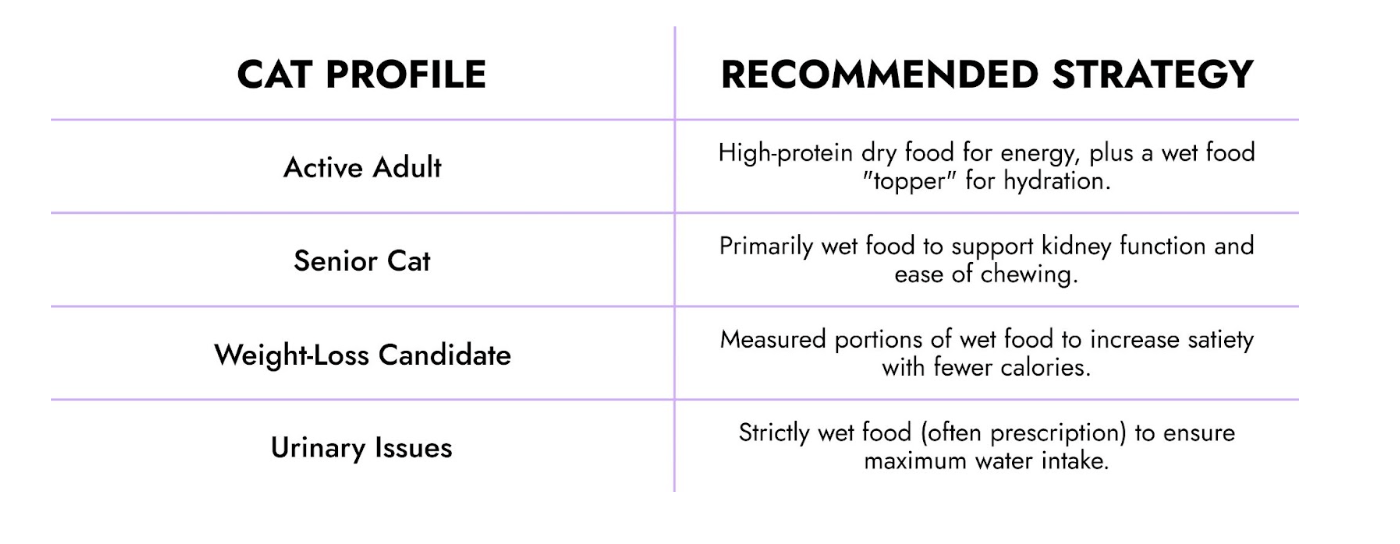
Sample Feeding Guides
Active Adult Cats
- Wet Food: 50-60% of the diet
- Dry Food: 40-50% of the diet
Senior Cats
- Wet Food: 70-80% of the diet
- Dry Food: 20-30% of the diet
Cats with Health Concerns (Urinary, Weight, Dental)
- Wet Food: Primarily wet food for hydration, weight control, and dental health
Individual needs vary. Consult York Veterinary Hospital for a plan tailored to your cat’s bloodwork and body condition.
FAQs
- Is wet or dry food better for indoor cats? Indoor cats are often less active. Wet food is generally better for weight management, but a mix can work if calories are strictly monitored.
- Can dry food cause dehydration? It won’t cause it directly if the cat drinks enough water, but since cats aren’t natural “drinkers,” dry-only diets often leave them in a state of mild, chronic dehydration.
- Should kittens eat wet or dry food? Both! Kittens should be exposed to various textures early so they don’t become “fixed” on one type of food later in life.
- Does dry food really clean a cat’s teeth? This is a common myth. Most standard kibble is too small and brittle; it shatters the moment a cat’s tooth hits it, providing very little abrasive action. Think of it like eating a cracker; it doesn’t replace brushing your teeth. While there are specific veterinary dental diets designed with a fibre matrix to scrub the tooth, regular checkups are the only way to ensure your cat’s mouth stays healthy.
- How do I transition my cat to a new type of food? Slow and steady is the rule! Cats have sensitive digestive systems and can be “neophobic” (afraid of new things). Start by mixing 25% new food with 75% old food for a few days, gradually increasing the ratio over 7 to 10 days. This prevents stomach upset and gives your cat time to adjust to the new flavour and texture.