


Pet Diagnostics & Imaging in Toronto – Ultrasound, X-Ray, CT & Lab Testing
When a pet is unwell, the first challenge is understanding why. Symptoms like lethargy, weight loss, or unexplained pain can point to dozens of different conditions, and getting the right treatment depends entirely on what the diagnostics reveal. At York Veterinary Hospital in Toronto, our in-house imaging and laboratory capabilities are built around one priority: accurate answers on the same visit, so treatment can start without unnecessary delay.
Need an appointment?
Book a Diagnostic Consultation for Your Pet Today
Why Accurate Diagnostics Matter for Your Pet
Many serious conditions produce few outward signs until they are already well advanced. Organ disease, internal bleeding, tumours, and structural changes to bones and joints can all be present long before a pet shows obvious distress. By the time visible symptoms appear, a very low radiation dose, considerably lower than older film-based systems.
This matters for dogs and cats in particular, because they tend to mask discomfort. A shift in behaviour, a reluctance to climb stairs, or a subtle change in appetite may be the only signal that something has changed internally. Imaging and laboratory testing allow a veterinarian to move past those signals and examine what is happening at the tissue and organ level, giving diagnosis a factual foundation rather than a clinical guess.
Veterinary Ultrasound Services
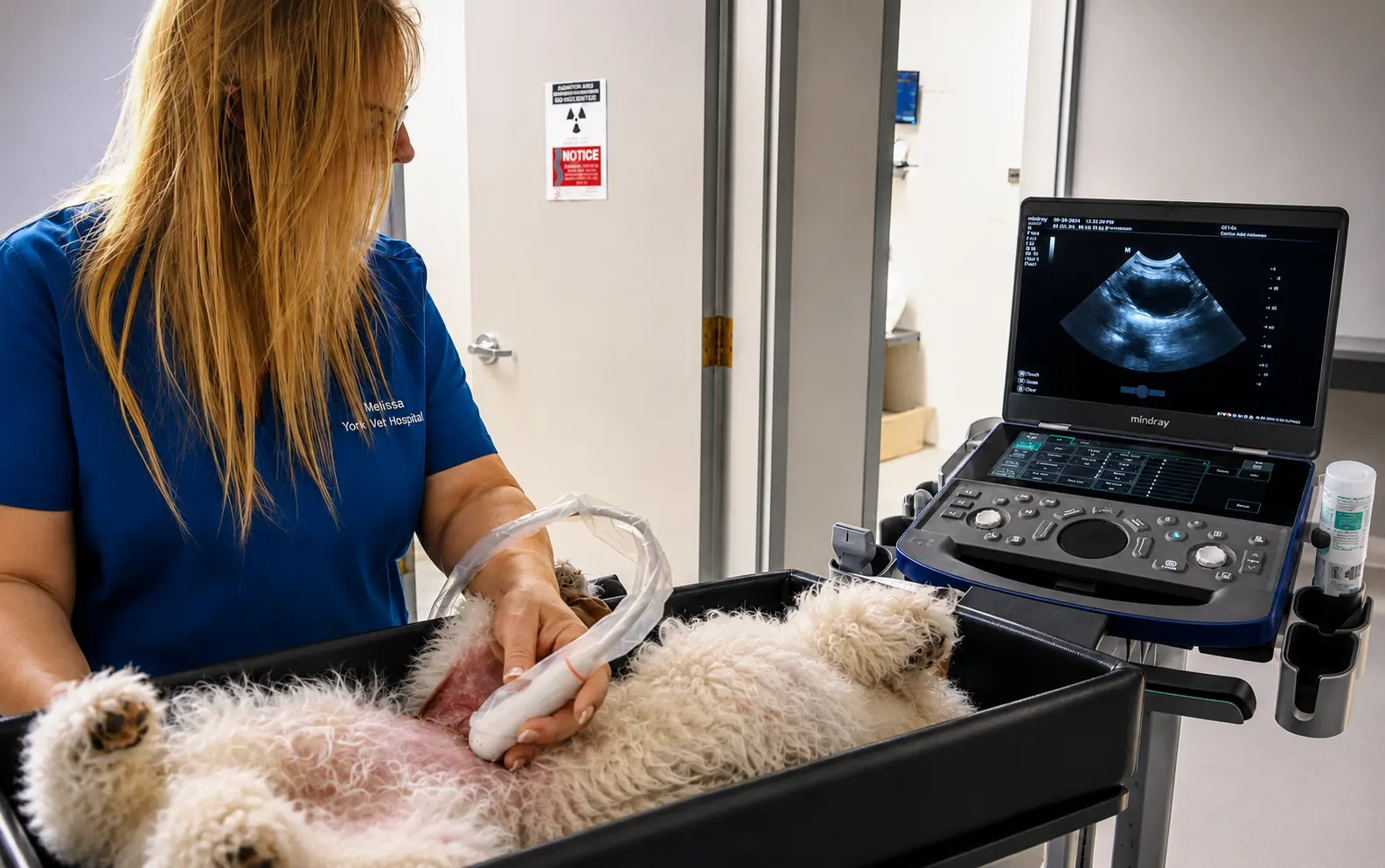
Ultrasound imaging uses high-frequency sound waves to produce real-time pictures of your pet’s internal structures, with no ionizing radiation involved. It requires no incisions and is well tolerated by most dogs and cats without sedation. The technology is safe across all age groups, including young animals and senior pets with existing health conditions.
What Ultrasound Can Detect
Abdominal ultrasound provides detailed views of the liver, kidneys, spleen, gallbladder, bladder, intestinal walls, and reproductive organs. It is also the primary tool for cardiac assessment when the heart needs closer evaluation than a stethoscope allows. Conditions regularly identified through ultrasound include:
- Liver and kidney disease
- Bladder and kidney stones
- Abdominal masses and enlarged lymph nodes
- Heart disease and fluid around the heart
- Intestinal thickening and abnormal motility patterns
- Pregnancy confirmation and fetal monitoring
Ultrasound-Guided Procedures
Ultrasound also makes certain procedures possible without surgery. When a mass, abnormal fluid, or suspicious tissue needs closer examination, the imaging guides a needle to exactly the right location for sampling or drainage. This approach produces the same diagnostic information as an open biopsy in many cases, with far less recovery time and procedural risk for your pet.
Digital X-Ray & Radiology Services
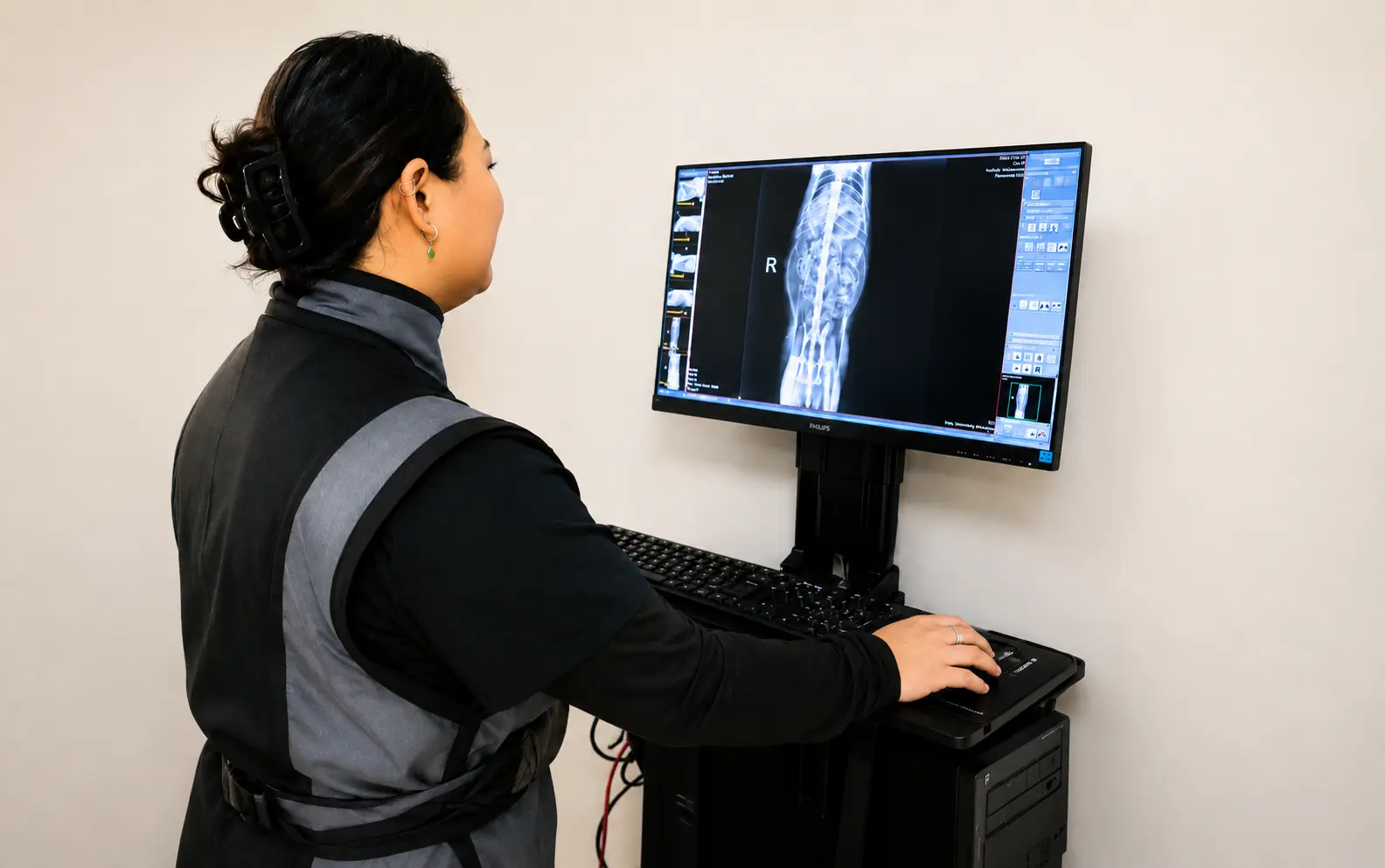
Our digital radiology system produces high-resolution images in seconds, with a fraction of the radiation exposure associated with older film-based equipment. Digital X-rays can be enlarged, contrast-adjusted, and shared electronically with a specialist when a second opinion is needed. Speed matters as much as quality here: in urgent situations, such as suspected foreign body ingestion or chest trauma, a clear image within seconds shapes what happens next.
What X-Rays Reveal
X-rays are the primary tool for evaluating the skeletal system, the chest cavity, and certain abdominal conditions. They are particularly useful when a pet is limping, has swallowed something, or is showing signs of breathing difficulty. Common findings include:
- Fractures and bone trauma
- Arthritis and progressive joint changes
- Foreign body ingestion, including objects that cannot pass safely on their own (see: what to do if your dog swallowed something)
- Chest conditions: fluid around the lungs, cardiac enlargement, masses
- Gastric dilatation-volvulus, a life-threatening emergency in large and deep-chested breeds
- Abdominal organ size, position, and density
When ultrasound and X-ray are used in combination, they provide a more complete picture than either one can alone. X-rays excel at bone and dense structures; ultrasound is better suited to soft tissue and fluid. Together, they cover much more diagnostic ground.
Advanced Imaging: CT Scans & MRI for Pets
Some conditions require anatomical detail that ultrasound and X-ray cannot fully provide. CT scans are used when precise cross-sectional images of complex bone structures, the chest, or the abdomen are needed. MRI is the preferred tool for examining the brain, spinal cord, and soft tissue surrounding joints, particularly when surgery is being planned and a surgeon needs exact spatial information.
York Veterinary Hospital coordinates CT and MRI imaging through trusted veterinary imaging partners in the Toronto area. When your pet requires advanced imaging, our team manages the referral, provides the imaging facility with the full clinical context they need, and reviews the results with you once they are available. Your pet stays connected to the same care team throughout the process.
In-House Laboratory & Diagnostic Testing
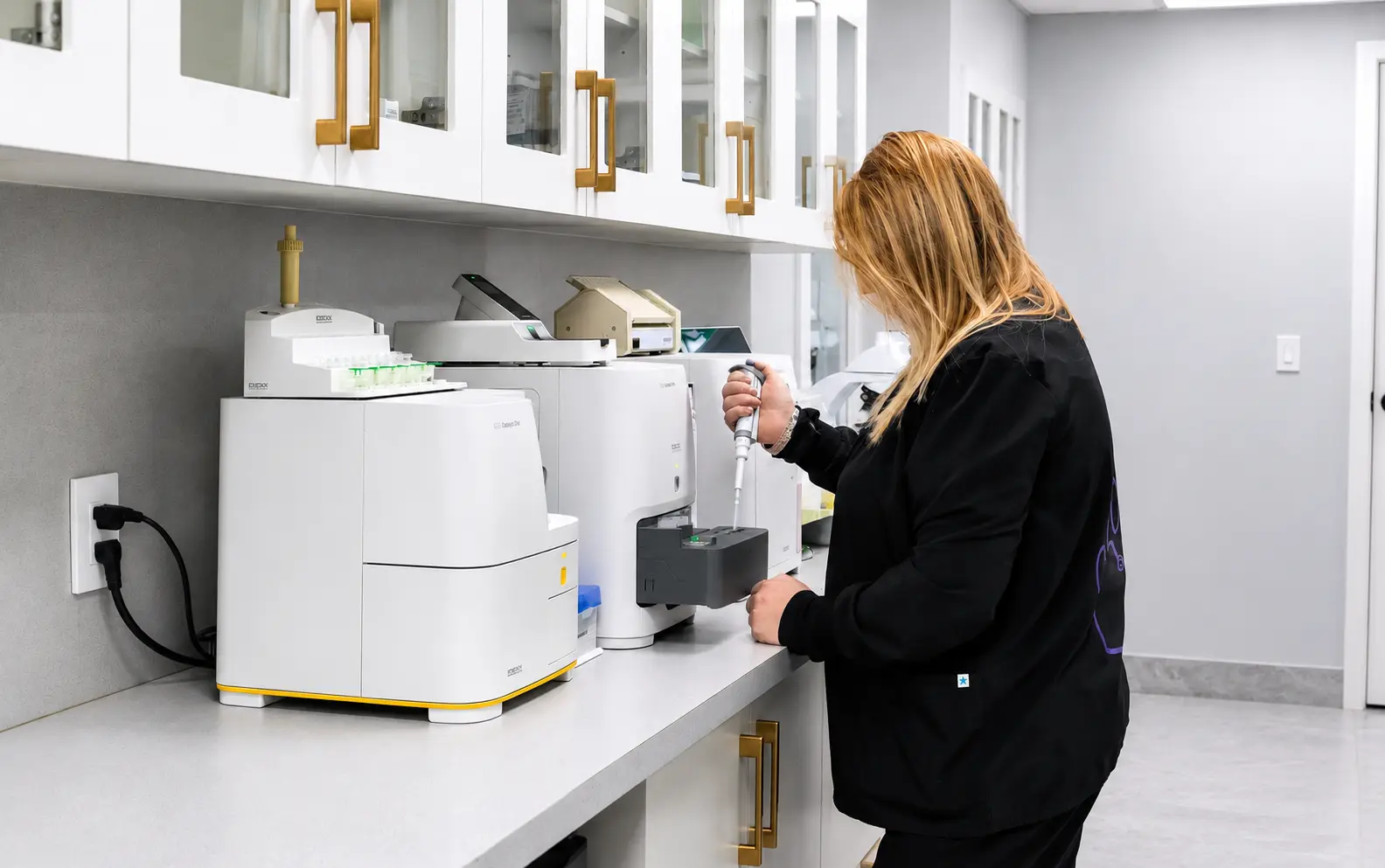
Imaging shows where a problem is located. Laboratory testing explains what is causing it. Our in-house diagnostic laboratory handles most routine and urgent tests without sending samples to an external facility, which means results are typically available the same day.
Tests available in-house include:
- Complete blood count (CBC) and biochemistry panels
- Urinalysis and fecal parasite exams
- Cytology: cell examination from skin lesions, masses, and fluid samples
- Pre-anesthetic bloodwork for pets scheduled for surgery or dental procedures
Pre-anesthetic bloodwork is a standard step before any procedure that involves sedation or general anesthesia. It checks organ function and identifies clotting abnormalities that could affect how a pet responds, information that shapes anesthetic planning before anything else proceeds.
When histopathology is needed, tissue samples are sent to a certified veterinary pathologist and results typically return within a few business days. We contact you as soon as they are ready. For more specialized testing, such as allergy panels, we partner with dedicated diagnostic laboratories, managing the entire process and reviewing the results with you.
Why Choose York Veterinary Hospital
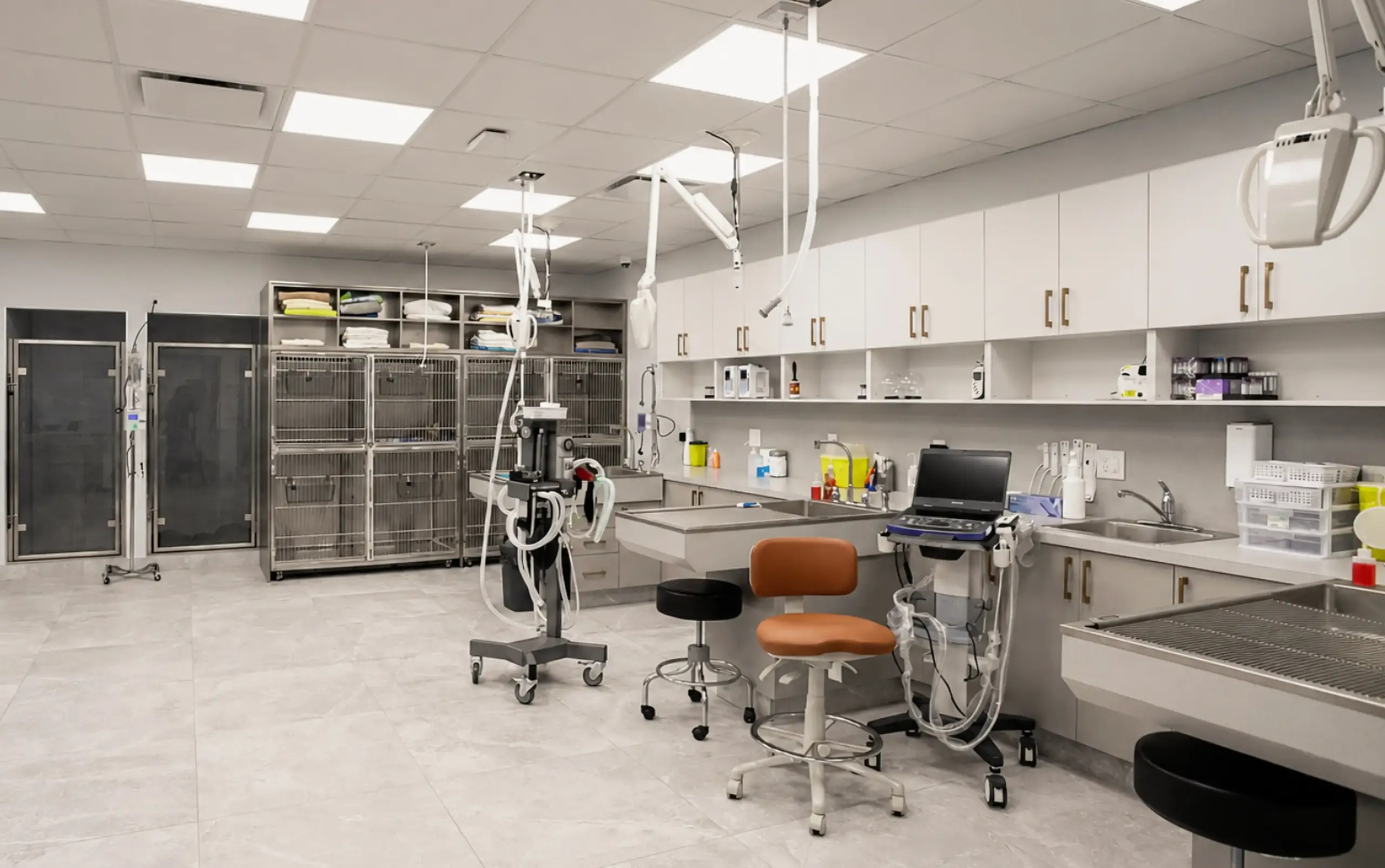
York Veterinary Hospital is an independently owned practice in Toronto. That structure has a direct effect on how diagnostic care works here: the veterinarian who reviews your pet’s imaging and lab results is the same one who has been managing their care, not a rotating staff member at a corporate chain. Continuity means that a change in bloodwork values, or a subtle finding on an ultrasound, is read in the context of what your pet’s history already shows.
Our imaging equipment meets current clinical standards, and our in-house laboratory handles the most common testing without external delays. Routine diagnostic panels are also a standard part of wellness exams for dogs and cats at every life stage, where bloodwork and urinalysis help catch developing conditions before symptoms appear. When advanced imaging or specialist interpretation is needed, we coordinate that directly rather than leaving the logistics to you.
Book Your Pet’s Diagnostic Consultation Today
Frequently Asked Questions
How much does a pet ultrasound or X-ray cost in Toronto? The total depends on which imaging modality is used, how many areas are examined, and whether any additional procedures are performed at the same visit. Pricing is discussed with you before we begin so you can make an informed decision.
Is diagnostic imaging safe for dogs and cats? Both ultrasound and digital X-ray are safe. Ultrasound uses sound waves and produces no radiation at all. Digital X-ray uses a very low radiation dose, considerably lower than older film-based systems. Most dogs and cats tolerate both procedures without sedation.
What can ultrasound detect that an X-ray cannot? Ultrasound produces real-time images of soft tissue organs, fluid accumulation, and blood flow. X-rays are better at capturing bone, the chest cavity, and dense structures. The two modalities complement each other because they reveal different types of information, which is why they are often used together.
Does my pet need to be sedated for imaging? The majority of X-rays and ultrasound examinations are completed without sedation. Cooperative patients typically tolerate both procedures well. CT scans and MRI require sedation or general anesthesia because the pet must remain completely still for an extended period.
Do you offer CT scans or MRI for pets? We coordinate CT and MRI imaging through trusted veterinary imaging partners in the Toronto area when the clinical situation calls for it. Our team manages the referral and stays involved through results and any follow-up care.
How soon will I have results? Most in-house bloodwork and imaging results are available the same day. When samples need to go to an external laboratory, such as for histopathology or specialized testing, results generally return within a few business days. We reach out as soon as they are in.
What laboratory tests do you offer in-house? Our laboratory handles complete blood counts, biochemistry panels, urinalysis, fecal exams, cytology, and pre-anesthetic panels. Tests requiring specialist analysis, such as allergy panels and histopathology, are sent to accredited veterinary diagnostic laboratories, with results followed up directly by our team.