Rabies is not a historical concern. In Ontario, the virus circulates in wildlife every year, and the province’s mandatory vaccination law exists because a single lapse in coverage puts both animals and people at genuine risk.
This is what Toronto pet owners need to understand about the rabies vaccine, the Ontario schedule, the disease itself, and what to do if your pet is exposed.
Your pet’s vaccinations can be booked directly through York Veterinary Hospital’s vaccination services.
Is Rabies Vaccination Required in Ontario?
Yes. Ontario Regulation 567 under the Health Protection and Promotion Act requires every dog and cat three months of age and older to be vaccinated against rabies. The regulation covers indoor-only cats. The fact that your cat never goes outside does not change the legal obligation.
After the initial vaccine, your pet must receive a booster within one year. From that point, revaccination is required every one to three years depending on which approved vaccine product your veterinarian uses.
Failing to comply can result in fines. An unvaccinated pet that is exposed to a potentially rabid animal also faces a substantially more restrictive and longer confinement protocol than one that is current.
Vaccination Schedule in Ontario
Initial vaccine: at or after 3 months of age. At York Veterinary Hospital, rabies is given at 16 to 18 weeks as part of the puppy or kitten series.
First booster: within 1 year of the initial vaccination date, at the 12 to 16 month visit.
Ongoing revaccination: depends on species. For dogs, York uses a one-year product for the initial dose; subsequent boosters switch to a three-year product. For cats, York uses a one-year product throughout, so annual revaccination applies. Your veterinarian’s records will show exactly when the next dose is due.
Certificate: keep a copy of your pet’s rabies vaccination record. It is required for licensing, boarding, grooming, and re-entering Canada after travel abroad.
Pets with an Unknown Vaccination History
Dogs and cats adopted from rescues, shelters, or abroad frequently arrive without complete vaccination records. Under Ontario law, a pet with no confirmed certificate is treated as unvaccinated regardless of its age or apparent health.
The approach is to vaccinate at the first appointment and begin the schedule from that date. If your pet is over a year old and has no verified prior vaccination, a single dose is given immediately, with a booster at one year, then standard revaccination from that point. Your veterinarian documents the starting date, which becomes the basis for all future renewals.
Do not assume an older pet has been vaccinated because it came from a reputable source. Assume it has not unless a signed certificate from a licensed veterinarian confirms it. This applies equally to Canadian adoptions and to pets imported from other countries. Vaccines given abroad are not automatically valid under Ontario law without a proper certificate signed at the time of vaccination.
If you are boarding, grooming, or crossing the border before the first booster is complete, confirm what records each facility or crossing requires in advance.
Rabies in Dogs: What the Disease Does
Rabies is caused by a neurotropic virus that travels from the bite wound along peripheral nerves to the brain. The incubation period, meaning the time between exposure and the appearance of symptoms, ranges from three weeks to three months in most pets. In some cases, signs can take up to a year or longer to appear. How quickly the disease progresses depends on where the bite occurred relative to the brain, the amount of virus that entered the wound, and the viral strain.
In dogs, early changes are often subtle: unusual restlessness, a shift in temperament, or repeated attention to the wound site. As the infection reaches the brain, dogs may become excitable and aggressive, wander without purpose, snap at stimuli that are not there, and lose coordination. Difficulty swallowing, excessive drooling, and progressive paralysis follow. Once clinical signs develop, death typically occurs within seven to ten days.
One fact that is easy to overlook: rabies in dogs can be transmitted before any symptoms are visible. A dog may be shedding the virus in its saliva up to ten days before it shows signs of illness. An animal that appears healthy after an exposure event is not necessarily safe.
Transmission requires direct contact: a bite breaking the skin, or infected saliva entering an open wound, the eyes, or the mucous membranes. The virus does not survive long outside a host and is not spread through the air under ordinary circumstances.
Rabies in Cats: What’s Different
Rabies in cats follows the same neurological progression as in dogs, but the clinical picture often differs. Where dogs tend to become agitated and wander, rabies in cats frequently produces extreme and sudden aggression, sometimes without a clear withdrawn or lethargic phase first. A gentle cat that turns severely aggressive, particularly one with any plausible exposure to wildlife, warrants an urgent call to your veterinarian.
Cats also have a stronger tendency to hide when they feel unwell, which delays owner recognition of something being wrong. If your cat came back inside with any injuries you cannot explain, or if you suspect contact with a wild animal, report it to your vet even when the cat appears normal. Rabies in cats can begin its infectious period before symptoms make it obvious.
A rabies vaccine for cats addresses a real risk. Given that cats are less likely than dogs to signal early-stage distress visibly, vaccination is the most reliable layer of protection you have.
Wildlife Risk in the Toronto and York Region Area
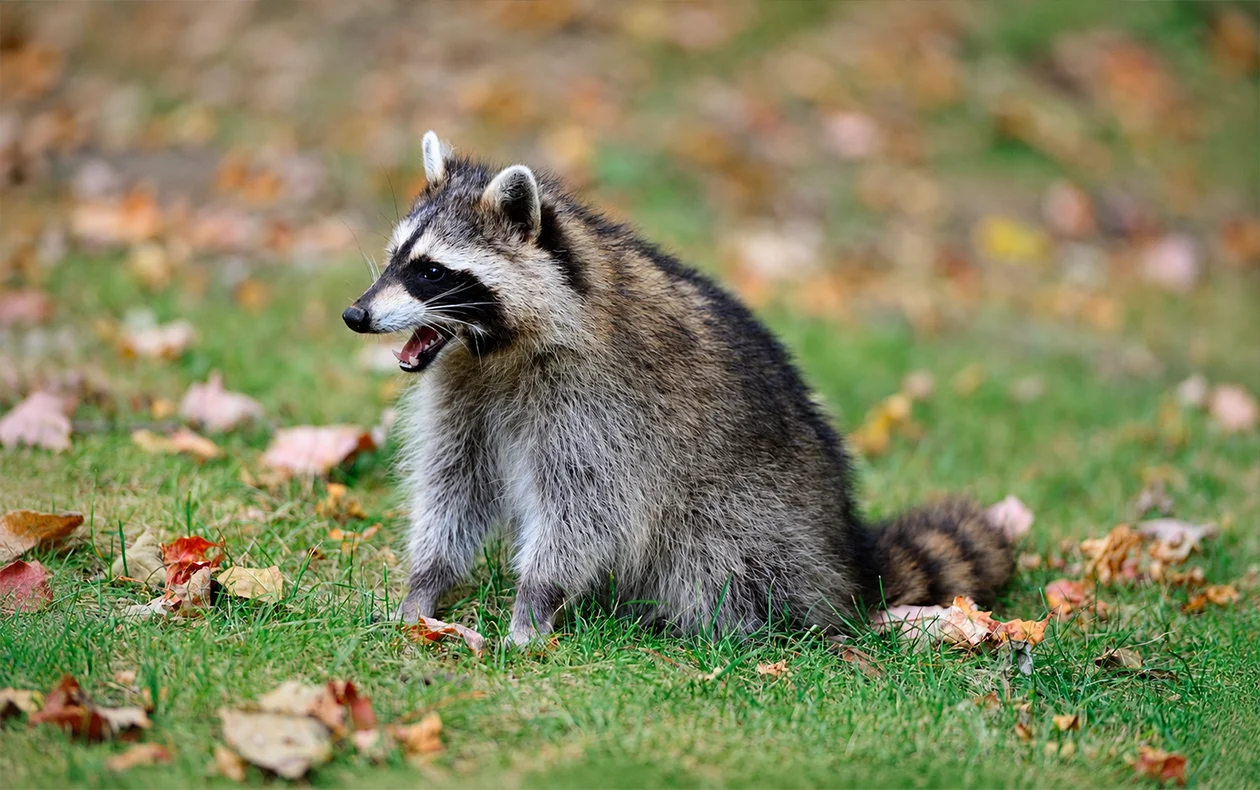
The primary rabies carriers in Ontario are bats, raccoons, skunks, and foxes. In the Toronto and York Region area, bats represent the most consistent ongoing concern for pet owners because they are widespread in urban environments, they carry bat-strain rabies that is separate from terrestrial strain outbreaks, and a bite from a bat frequently goes undetected.
Bats have small, needle-like teeth. A bat bite can leave no visible mark and produce no sensation the person notices. If you wake to find a bat in a room where you or your pet were sleeping, or if your cat brings in a bat, treat the encounter as a potential exposure and contact your veterinarian and local public health unit immediately. Testing the bat is the only way to confirm or rule out rabies. If you can safely contain it without direct skin contact, use thick gloves or an inverted container with a piece of cardboard slid underneath. Contact York Region Public Health or Toronto Public Health, who can arrange submission for testing through the provincial laboratory. Do not release the bat before this step is complete. If it escapes, exposure must be treated as confirmed.
The same applies when a bat is found in a room with a sleeping child, or with anyone who cannot reliably confirm whether contact occurred.
Raccoons, skunks, and foxes that are infected may lose their natural wariness around people, approach unusually close, appear disoriented, or behave erratically during daylight hours. Not every raccoon near your property is rabid, but an animal that is acting strangely and does not retreat is a legitimate risk. Keep your pets on leash and prevent them from approaching or cornering wildlife.
If Your Pet Has Been Exposed
Speed matters. If your pet had contact with a potentially rabid animal, confine your pet away from other people and animals immediately, then call your veterinarian. Do not wait to see whether symptoms develop.
Under Ontario protocol: if your pet’s rabies vaccination is current and it is revaccinated within seven days of the exposure, home observation for 45 days is required. If the vaccination is not current at the time of exposure, the animal must be revaccinated as soon as possible and confined for three to six months.
The difference between a current and an overdue pet is measured in months of restricted movement and daily monitoring. It is also the difference between a straightforward revaccination appointment and a public health protocol involving confinement, veterinary oversight, and potential reporting obligations.
If your pet has bitten a person, contact your local public health unit immediately in addition to your veterinarian.
Do Indoor Pets Need the Rabies Vaccine?
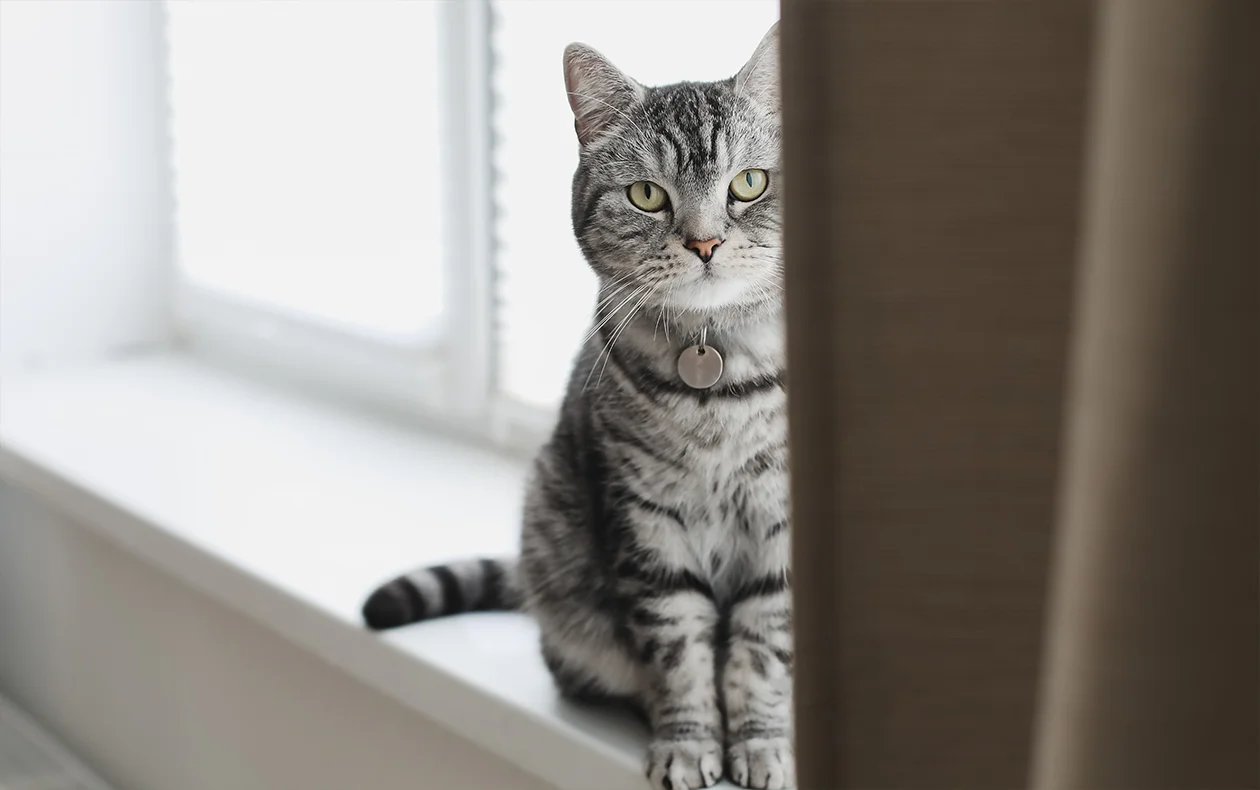
Yes, for two reasons: legal requirement and practical risk.
Ontario Regulation 567 applies to all cats and dogs regardless of how much time they spend outside. There is no exemption for indoor lifestyle.
On the practical side, true indoor-only status is less reliable than most owners assume. Cats escape. Bats enter homes through gaps in roof lines, attics, and open windows, and are frequently found in bedrooms and living rooms by owners who never noticed them come in. The Government of Ontario confirms that any bat encountered indoors should be considered potentially rabid unless it tests negative. A single undetected encounter with an infected bat is a real exposure event, regardless of whether your pet otherwise lives entirely inside.
The cost of a rabies vaccine for cats is far lower, in every sense, than the cost of an exposure protocol.
Titer Testing and Ontario Law
Some owners ask whether antibody titer testing can substitute for revaccination. A titer test measures the level of antibodies currently in your pet’s blood from prior vaccination. York Veterinary Hospital offers titer testing for non-core vaccines, and results can reasonably inform the revaccination decision in those cases.
For rabies, the answer is no. Ontario law accepts only a valid vaccine certificate as proof of compliance. A titer result, regardless of the antibody level it shows, does not satisfy Ontario Regulation 567 and is not accepted for boarding, licensing, travel documentation, or an exposure-event protocol. Your pet must have a current, dated rabies vaccine certificate on file with your veterinarian.
Travelling With Your Pet

If you are travelling to the United States with your dog or cat, the U.S. federal government does not currently require a rabies certificate for entry from Canada. Individual states have their own requirements, which vary. Check the rules for your specific destination before you leave.
Returning to Canada is a different matter. A rabies vaccination certificate signed by a licensed veterinarian is required to re-enter with your pet. Without it, your pet may be denied entry or subject to quarantine.
Frequently Asked Questions
When should a puppy or kitten receive its first rabies vaccine?
At York Veterinary Hospital, the first rabies vaccine is given at 16 to 18 weeks as part of the puppy or kitten series. If your young pet is already past 18 weeks and has not been vaccinated, book an appointment as soon as possible.
Does my indoor cat legally need a rabies vaccine in Ontario?
Yes. Ontario Regulation 567 applies to all cats and dogs three months of age and older. There is no exemption for animals kept exclusively indoors.
How often does the rabies vaccine need to be renewed?
After the initial vaccine and the one-year booster, the schedule depends on species. At York Veterinary Hospital, dogs move to a three-year rabies product after their first booster. Cats are on an annual schedule throughout, as York uses a one-year product for cats. Your veterinarian’s records will show when your pet is next due.
What happens if my pet bites someone and its rabies vaccine is not current?
This becomes a public health event. Your local public health unit is notified. Depending on the circumstances, your pet may be subject to quarantine, extended confinement, or euthanasia for rabies testing. Keeping vaccination current is the most straightforward way to avoid this outcome.
Can a titer test replace the rabies vaccine under Ontario law?
No. Ontario law requires a current vaccine certificate. A titer result is not accepted as legal proof of compliance for the rabies requirement, regardless of the antibody level measured.
What does a vaccination appointment include at York Veterinary Hospital?
Every vaccine visit includes a thorough physical examination as well as the vaccine itself. Your veterinarian will assess your pet’s current health, confirm which vaccines are due, and discuss lifestyle factors that may affect which additional vaccines are recommended.
Need Vaccine Service?
Book Your Pet's Rabies Vaccine at York Veterinary Hospital