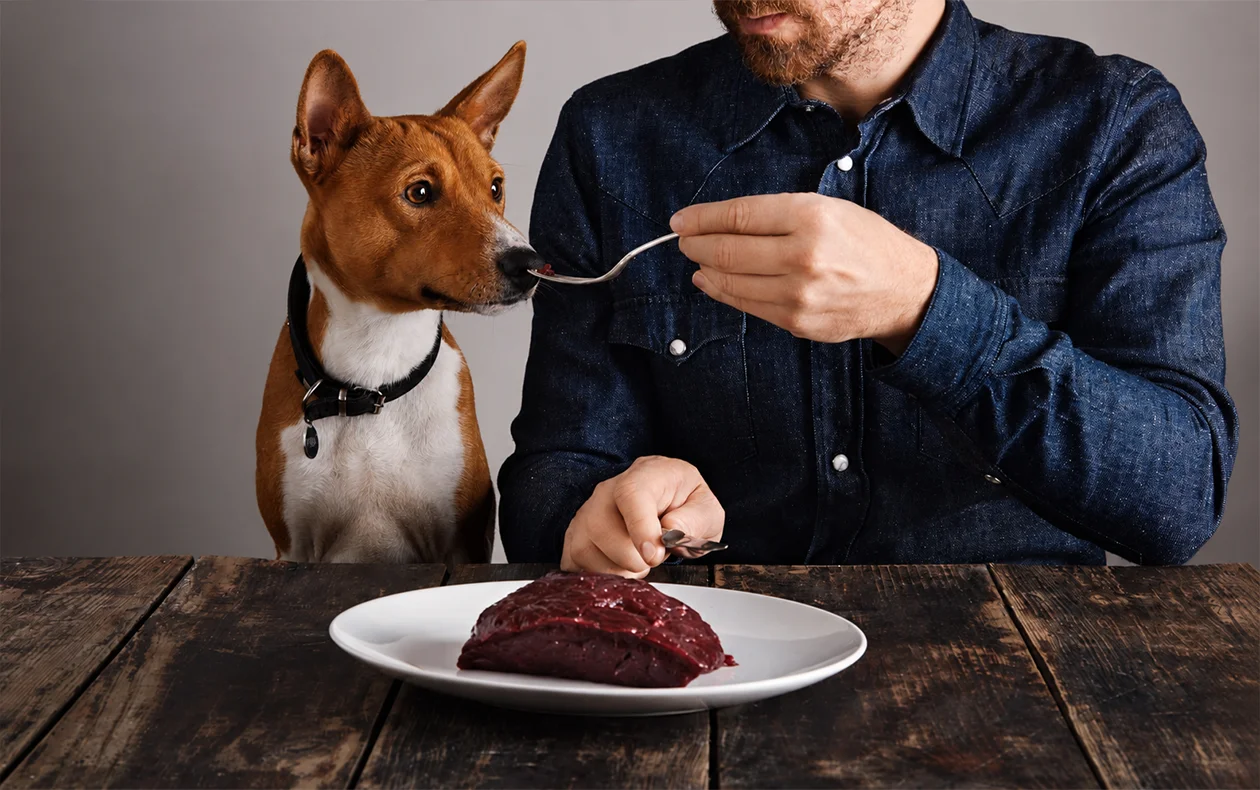
Raw feeding is one of the most common topics that comes through our door. Some owners have been doing it for years and want confirmation that their approach is sound. Others have read about it online and are weighing whether to switch. A few are trying to solve a persistent problem (recurring allergies, a dull coat, ongoing digestive trouble) and have decided that commercial food is the root cause.
This guide covers what the research actually shows, what the genuine uncertainties are, and what responsible raw feeding looks like if you decide to proceed. If you want to talk through your specific dog’s situation, York Veterinary Hospital’s nutrition service is the right starting point.
What Is a Raw Diet for Dogs?
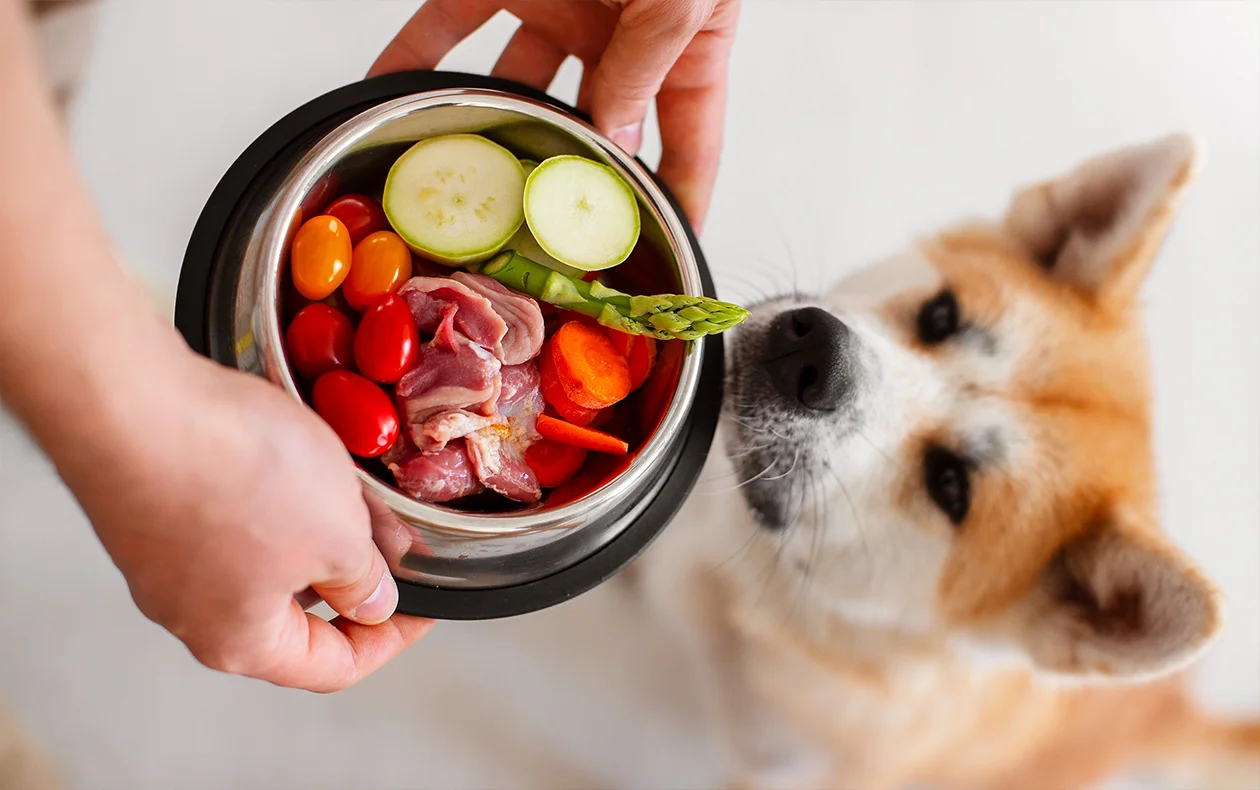
A raw diet for dogs is any feeding approach centred on uncooked animal proteins: raw meat, raw bones, and organ meat, sometimes supplemented with vegetables, eggs, fruit, or dairy. The most widely recognized framework is the BARF diet (Biologically Appropriate Raw Food, sometimes referred to as Bones And Raw Food), a concept developed by Australian veterinarian Dr. Ian Billinghurst in the early 1990s. His argument was that domesticated dogs thrive on something close to the diet of their wild ancestors.
Commercial versions are now sold in several formats: frozen raw, freeze-dried raw, and products processed through high-pressure pasteurization (HPP). Many owners also prepare meals at home using butcher cuts and added vitamin and mineral supplements.
What Pet Owners Report
Owners who switch to a raw food diet for dogs consistently describe a similar set of changes: a glossier coat, firmer and smaller stools, better energy, cleaner teeth, and fewer episodes of digestive upset. These observations are real in the sense that many people share them. The question is whether the research supports raw feeding as the cause.
The honest answer is that scientific evidence for clinically meaningful benefits over appropriate cooked or commercial diets is limited. The reports come largely from owner surveys and anecdotal accounts, not controlled clinical trials. Coat condition, stool consistency, and energy level are each influenced by many variables, and no well-designed study has isolated raw feeding as the driver of observed improvements.
That does not mean every owner’s experience is mistaken. It means we cannot attribute those improvements to raw food with confidence.
What the Research Shows
Research on raw feeding has concentrated on two questions: whether the diets are nutritionally adequate, and whether they are microbiologically safe. On both points, the findings are consistent enough to take seriously
Nutritional Adequacy
A widely cited 2011 study published in the British Journal of Nutrition examined raw meat-based diets fed to dogs and found that 95% were deficient in at least one essential nutrient. The most common gaps were in calcium-to-phosphorus ratios (particularly pronounced in home-prepared diets without raw meaty bones as the calcium source), vitamin D, vitamin E, iodine, and omega-3 fatty acids. Home-prepared diets carry a higher risk than commercial raw products because owners typically rotate through a limited set of ingredients, and without formulation support from a veterinary nutritionist, imbalances accumulate over months and years before clinical signs appear.
Commercial raw diets carrying an AAFCO (Association of American Feed Control Officials) “complete and balanced” designation have at minimum been formulated to meet established nutrient profiles. However, the feeding-trial data provided by raw diet manufacturers is often thinner than what is available for established cooked commercial brands.
Microbiological Safety
Multiple studies across several countries have documented contamination rates that warrant serious consideration. Research published in the Canadian Veterinary Journal and the Journal of Small Animal Practice found Salmonella in a significant proportion of raw-fed dogs, frequently with antibiotic-resistant strains. A 2022 UK study confirmed that dogs eating raw diets carry higher rates of both Salmonella and antimicrobial-resistant Escherichia coli than dogs on cooked or commercial food. Listeria has been identified in commercial raw pet food products across multiple jurisdictions.
The risk extends beyond the dog. These pathogens pass through feces and contaminate surfaces, bowls, clothing, and the hands of anyone who handles the animal or its food. Immunocompromised household members, young children, elderly adults, and pregnant individuals carry a substantially elevated risk of serious illness from these exposures. A documented cluster of Shiga toxin-producing E. coli O157:H7 infections linked directly to raw pet food in the UK resulted in one fatality.
The Canadian Veterinary Medical Association (CVMA) concluded in its 2023 position statement that “the scientific evidence of animal and human health risks in feeding RMB pet food products outweighs any purported benefits.” The World Small Animal Veterinary Association (WSAVA), the American Veterinary Medical Association (AVMA), and the American Animal Hospital Association (AAHA) have independently reached the same position.
Risks Worth Understanding Before You Decide

For Your Dog
Bacterial infection is the most immediate concern, but not the only one. Nutritional deficiency from an imbalanced home-prepared diet often takes months or years to become clinically visible. By the time signs appear, real harm has been done. Raw bones carry risks that cooked bones do not. Weight-bearing bones from large animals, such as femurs and knuckle bones, are dense enough to fracture carnassial teeth. Fragments that enter the gastrointestinal tract can cause perforations or obstructions requiring emergency surgery. The severity varies by bone type, jaw strength, and the individual dog’s chewing behaviour, but no raw bone is entirely without risk. Parasites including Toxoplasma, Neospora, and Sarcocystis can be present in raw meat, particularly in game and wild-caught protein sources.
For Your Household
The zoonotic risk from managing a raw-fed dog is not theoretical. Surfaces, leashes, and shared spaces all become potential transmission routes when a dog is shedding Salmonella asymptomatically. Immunocompromised individuals in the home, including people undergoing chemotherapy, those with chronic immune conditions, and infants under one year, face a genuinely elevated risk of serious illness from close, regular contact with a raw-fed pet.
On Antimicrobial Resistance
This concern extends beyond the individual household. Multiple studies have identified antimicrobial-resistant organisms in commercial raw pet food and in the feces of raw-fed dogs. These strains can transfer to humans and can reduce the effectiveness of antibiotics in treating infections. The CVMA has identified this explicitly as a public health concern in its formal position.
Does High-Pressure Processing Change the Equation?
HPP applies extreme pressure rather than heat to reduce pathogen levels in raw pet food without technically cooking it. It does lower contamination rates compared to unprocessed raw. As noted in the CVMA’s position, however, HPP raw products should not be treated as pathogen-free. They represent a lower-risk choice within the raw feeding category, not a safe one by conventional standards.
Evaluating a Commercial Raw Product

The commercial raw market ranges from well-formulated products with documented pathogen-testing standards to products that offer neither. Beyond the regulatory AAFCO designation, a few additional criteria separate the stronger options.
Named protein sources matter. A product listing “chicken” or “salmon” as its protein carries a more traceable supply chain and more consistent nutrient levels than one listing “meat” or “poultry by-products.” The same applies to organ ingredients.
Some manufacturers publish batch pathogen testing data. A smaller number of commercial raw producers make Salmonella and Listeria test results available by lot number. This indicates a more controlled production environment than brands that provide no testing information.
Life stage matters more in raw than in conventional commercial diets. Puppy formulas require different calcium-to-phosphorus ratios than adult maintenance formulas. Feeding an adult formula to a growing large-breed puppy is a documented cause of skeletal problems in raw-fed dogs. If you are feeding raw to a puppy, confirm the formula is approved for growth or for all life stages.
What About a Raw Food Diet for Cats?
A raw food diet for cats carries the same bacterial and nutritional risks as it does for dogs, with one additional concern specific to cats as obligate carnivores: taurine. Cats cannot synthesize taurine in adequate quantities and must obtain it from dietary sources. Taurine deficiency causes dilated cardiomyopathy and retinal degeneration, both of which are irreversible once advanced. Raw meat contains taurine, but levels vary considerably by protein source and handling method. A home-prepared raw food diet for cats that has not been properly formulated can produce deficiency over time even when the cat appears outwardly healthy.
If You Are Committed to Raw Feeding
If you have weighed the risks and want to proceed, the following reduces exposure for both your pet and your household:
Choose commercially prepared products over home-prepared ones. A commercial raw diet bearing an AAFCO “complete and balanced” statement has been formulated to meet nutrient profiles. Home-prepared diets require formulation support from a veterinary nutritionist to come close to complete.
Favour HPP products where available. The pathogen burden is lower than in unprocessed raw, and the nutritional profile is equivalent.
Apply strict handling protocols. Treat raw pet food with the same hygiene you apply to raw meat in your kitchen: dedicated surfaces and utensils, immediate handwashing, no cross-contact with areas used for human food preparation, sealed storage, and prompt disposal.
Tell your veterinarian what you are feeding. A raw diet affects how stool culture results are interpreted, may interact with parasite prevention protocols, and should factor into your annual wellness visit discussion.
Book a nutrition consultation if you have concerns about your dog’s diet. Whatever you are feeding, including raw, York Veterinary Hospital’s nutrition service can assess your dog’s overall health and help you feed as safely as possible. Consultations are available as standalone appointments or as part of a wellness exam. Our consultations centre on veterinary therapeutic diets, and for a fully balanced raw or home-prepared formulation, we can point you toward a board-certified veterinary nutritionist.
Frequently Asked Questions
Is raw food inherently better than kibble?
The claim that raw is superior by nature has not been established by clinical evidence. Quality matters more than format. A properly formulated, high-quality commercial diet fed in the right amount outperforms a poorly constructed raw diet on both nutritional completeness and safety.
Can puppies eat raw food?
Puppies are at higher risk from bacterial contamination than healthy adult dogs because their immune defences are not fully developed. Nutritional balance is also more critical during growth, and errors in calcium-to-phosphorus ratios specifically can cause skeletal problems that are difficult to correct later. Raw feeding in puppies should not begin without veterinary nutrition guidance.
Is the BARF diet the same thing as a raw diet?
The BARF diet is one framework within raw feeding: it emphasizes raw meaty bones as the primary calcium source and includes vegetables and fruit alongside muscle meat and organs. Other approaches, including prey-model raw (whole carcasses, no plant matter) and commercial raw mixes, follow different proportions. Prey-model advocates argue that plant matter is unnecessary for dogs; BARF proponents include vegetables and fruit for fibre and micronutrient coverage. The differences affect both nutritional adequacy and risk profile, and neither framework has strong controlled trial evidence supporting it over the other.
My dog has been on raw for two years with no apparent problems. Why should I be concerned?
Some dogs on raw diets remain apparently healthy. Absence of visible signs, however, does not mean absence of risk. Salmonella shedding in feces occurs without illness in the dog itself. Nutritional deficiencies from imbalanced diets often take years to produce clinical signs. The concern is not that every raw-fed dog will become sick, but that the risks are real, documented, and in many cases preventable.
Can York Veterinary Hospital help me with raw feeding?
If you are feeding raw and want to be sure your dog is getting everything it needs, York Veterinary Hospital can help. A veterinary exam assesses your dog’s current health and flags anything worth addressing, no matter which diet you have chosen. Our nutrition consultations centre on veterinary therapeutic diets, and for a fully balanced raw formulation, we can direct you to a board-certified veterinary nutritionist. Book through our nutrition service.
Need an appointment?
Book a Nutrition Consultation at York Veterinary Hospital