
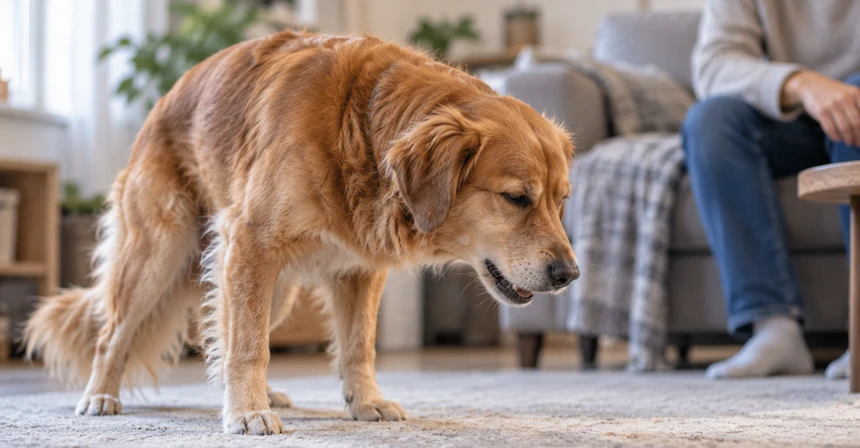
A harsh, honking hack, often ending in a retch. Owners arrive convinced their dog has swallowed something, and most of the time the dog has been to daycare, boarding, a grooming appointment or the dog park a week or two before.
Most dogs recover from it without much trouble. Some do not, and knowing which is which is the useful part.
One name, several organisms
More than one organism causes this. Veterinarians call it canine infectious respiratory disease complex: a group of organisms that produce the same syndrome, sometimes alone and often together.
The American Veterinary Medical Association lists the usual agents. On the viral side: canine parainfluenza virus, canine adenovirus type 2, canine influenza, canine respiratory coronavirus, canine herpesvirus and canine distemper virus. On the bacterial side: *Bordetella bronchiseptica*, *Mycoplasma* species and *Streptococcus equi* subspecies *zooepidemicus*.
*Bordetella* gets top billing because it is the organism the common vaccine targets, and it is often not the one that turns up. Researchers tested 50 samples from coughing dogs across six US states during the winter of 2023 and 2024: *Mycoplasma canis* was detected in 20 of them and *Bordetella bronchiseptica* in 3.
Two cautions about that finding. The sample is small and American. And detecting an organism is not the same as proving it caused the illness, which the authors say themselves, since several of these organisms are found in healthy dogs too.
What it does show is that a coughing dog often has something other than *Bordetella* on board, which is why a fully vaccinated dog can still come home coughing.
How it spreads
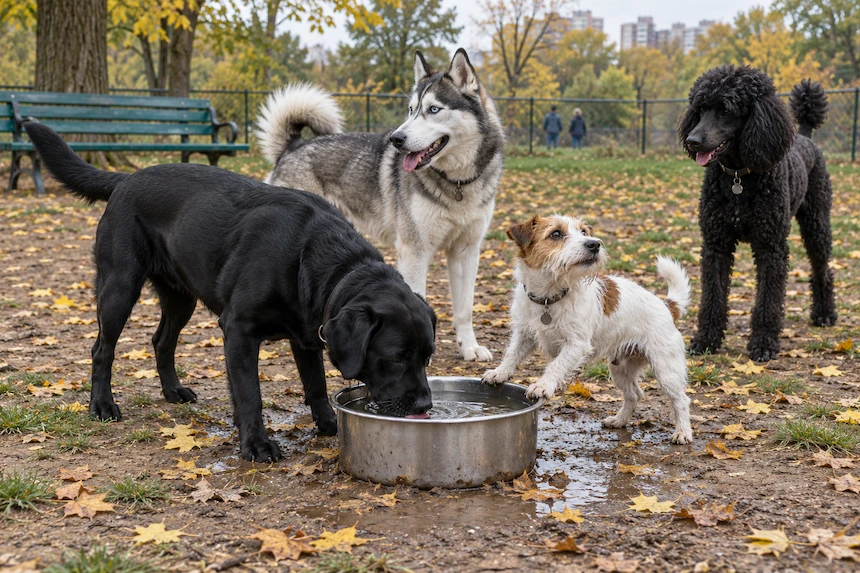
Direct contact, which for dogs means nose to nose, licking and mouthing. Airborne droplets from a cough or a sneeze, which travel further than most owners assume. And contaminated surfaces: shared water bowls, toys, bedding, the fence rail at the park, and the hands of anyone who has just patted an infected dog.
The boarding kennel is only part of the picture. A condo elevator, a training class, the groomer, an off-leash park and our own waiting room all put dogs in range of each other.
What the illness usually looks like
Incubation runs two to ten days from exposure to the first cough, and some cases take up to a fortnight, so the daycare visit that caused it is often well behind you by the time you notice.
A straightforward case is a dog who coughs, sometimes dramatically, but is otherwise themselves. Eating, drinking, alert, still interested in a walk. Mild cases settle in seven to ten days and Cornell’s Riney Canine Health Center puts full recovery at around two weeks, though an uncomplicated cough can rumble on for three in a dog who is otherwise well.
A dry honk followed by a gag that produces a little foam is the classic pattern.
When a cough stops being routine
Call us if any of the following show up, because they suggest the infection has moved into the lungs:
- Lethargy, or a dog who will not get up
- Loss of appetite
- Fever
- A wet, productive cough rather than a dry one
- Fast or laboured breathing
- A cough that is still going after ten days
Puppies, flat-faced breeds and dogs with existing heart or lung disease have less margin, and their coughs deserve an earlier call than a healthy adult’s would. The same goes for older dogs, where a cough sits alongside the other changes covered on our senior pet care page.
How we work out what it is
Most cases are diagnosed on the history and the examination. The AVMA calls this a presumptive diagnosis: where your dog has been in the past fortnight, the sound and pattern of the cough, and an examination that rules out the other causes.
Testing comes in when the picture does not fit. Chest radiographs when the examination points to pneumonia. A PCR respiratory panel when a cough is not resolving, when several dogs in a household are affected, or when a boarding facility needs to know what it is dealing with.
In small breeds in particular, a collapsing trachea produces a honking cough that is regularly mistaken for kennel cough. Heart disease and an inhaled grass seed can do the same. That is the main reason a cough running an unusual course earns an examination rather than another week of waiting.
Looking after a coughing dog at home
Walk them on a harness, not a collar, for as long as the cough lasts. Pressure on the throat sets off a coughing fit, and the AVMA makes the same point about neck leashes.
Use steam. Ten or fifteen minutes in the bathroom with a hot shower running loosens a dry cough, and it is most useful before bed.
Give them a quiet week. Excitement and exercise both trigger coughing. Keep them away from the other dogs in the household where the layout allows it.
Watch the appetite and the breathing between coughing fits. A dog who is eating and breathing normally in between is doing fine. A dog who is not is the dog we want to see.
The Bordetella vaccine: three routes, not one
| Route | Initial series | Onset | Booster |
| Oral, into the cheek pouch | Single dose | Three to five days | Annually |
| Intranasal, drops in the nose | Single dose | Three to five days | Annually |
| Injectable, under the skin | Two doses, two to four weeks apart | At least five days after the second dose | Annually |
The oral and intranasal vaccines are given at the mucosal surface where the infection actually starts, which is why a single dose works and protection develops quickly. The injectable produces antibody in the bloodstream instead, and needs a two-dose priming series before it offers anything. The schedules above come from the AAHA canine vaccination guidelines, which classify Bordetella as a lifestyle vaccine rather than a core one.
The three routes also differ in what else they carry. The intranasal product typically covers three agents, *Bordetella* plus adenovirus type 2 and parainfluenza. The oral and injectable products cover *Bordetella* on its own. That gap matters less than it sounds, because adenovirus type 2 and parainfluenza are both already in the core DAPP vaccine every dog receives, and our vaccinations page sets out that schedule.
What we use, and when to book it
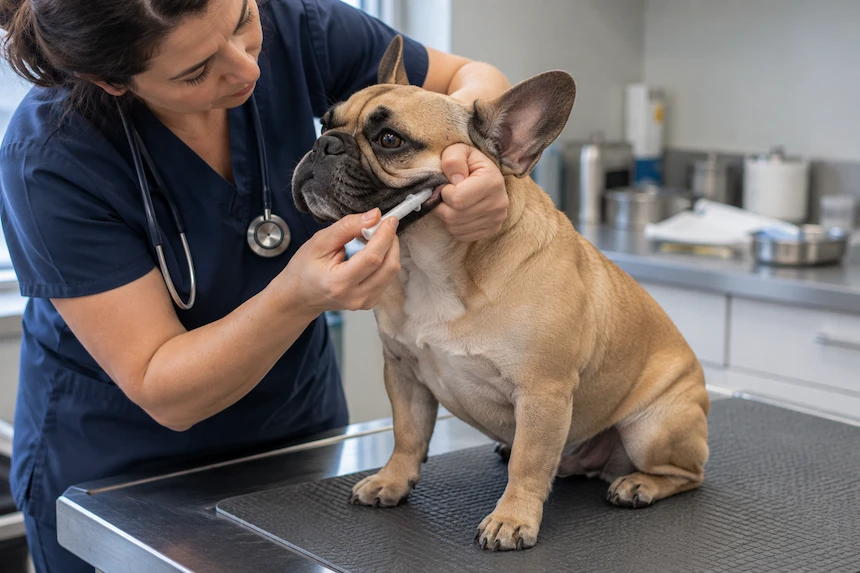
At York Veterinary Hospital, we use the oral vaccine. It is a single dose into the cheek pouch, with no needle and nothing squirted up the nose, and most dogs take it without much fuss.
Give it at least seven days before boarding or daycare, and ten to fourteen if you can plan that far ahead. Booking the vaccine for the morning of the trip does not work. No route protects that fast.
We booster it once a year. If your dog boards frequently or is in daycare weekly, raise it at the appointment and we will look at the schedule against their actual exposure.
Most Toronto boarding and daycare facilities require proof of Bordetella vaccination, and each one sets its own rules about how recent it has to be. Check with the specific facility before you book, because there is no provincial standard and the requirements vary.
Side effects
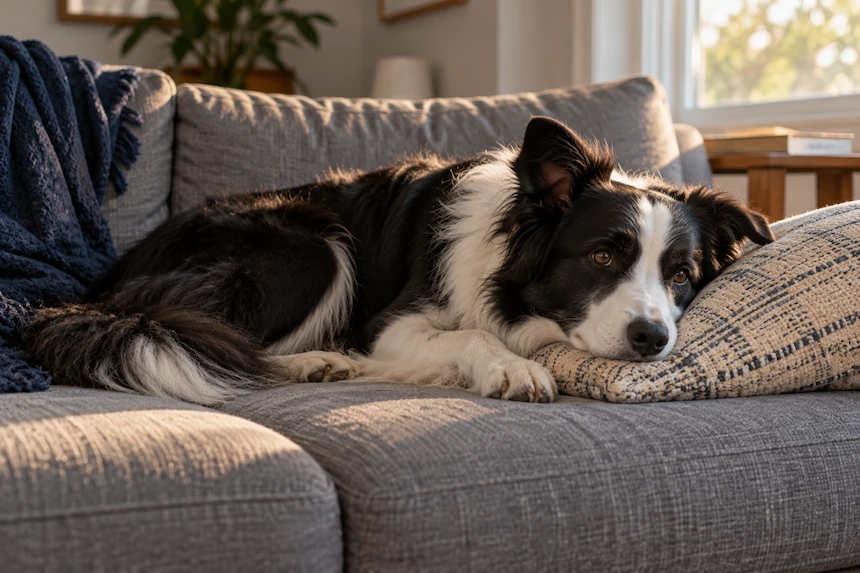
Reactions are uncommon and usually minor. A review of 9 million doses of Bordetella vaccine found fewer than 1 per cent of dogs had any reaction at all.
With the oral vaccine, the usual outcome is nothing. A few dogs are quiet for a day. A small number cough or sneeze for a day or two afterward and then settle. The injectable form can leave a small lump or some soreness where it went in.
Call us if your dog develops facial swelling, hives, vomiting or laboured breathing after any vaccine. Those reactions are rare, we treat them, and we build the next appointment around what happened.
What the vaccine does, and what it does not
It reduces severity. Cornell’s summary is that vaccination lessens the severity of symptoms, including the development of pneumonia, and reduces the need for more aggressive emergency care.
It does not guarantee your dog will not catch anything. It cannot, for two reasons. First, immunity to a respiratory pathogen at a mucosal surface is never absolute. Second, and more importantly, a Bordetella vaccine does nothing against canine influenza, *Streptococcus zooepidemicus*, or the *Mycoplasma* species that turn up in so many cases.
So the vaccine changes a bad two weeks into a mild one and makes pneumonia less likely. It is not a guarantee, and nobody should tell you it is.
About the 2023 outbreak
Case numbers did rise in late 2023 in several US states and parts of Canada. The AVMA reported that from September to November that year, Colorado State University’s veterinary teaching hospital saw more than double the canine pneumonia cases of the same period in 2022. Numbers fell again by January 2024.
The 2025 study mentioned earlier ran multiplex PCR and next-generation sequencing on those winter samples and concluded that the cases were not associated with the emergence of any new pathogen. The organisms found were the ones already on the list above.
One reason it felt mysterious has not changed. Canine respiratory disease is not reported or tracked the way a notifiable disease is, in Canada or the United States, so when an owner asks whether something is going around, there is no national number to point at. We can tell you what we are seeing in our own patients, and that is the honest limit of it.
If your dog is coughing, here is how to come in
Please do not bring a coughing dog through the front door and into the waiting room.
Come in alone first and let us know you have arrived. Leave your dog in the car. We will take you both straight into a separate room away from reception.
This takes an extra two minutes and it keeps the infection away from the puppy who is in for a first vaccine appointment and the fourteen-year-old cat waiting for bloodwork. Call us at (647) 748-9060 before you set off if you can.
Frequently asked questions
How long is my dog contagious?
The working rule is that your dog is contagious for as long as they are coughing and for about two weeks after the cough stops. So no daycare, no boarding and no dog park until a fortnight past the last cough, and quiet walks somewhere you will not meet anyone in the meantime. Some organisms are shed for longer, and if the case has been a difficult one we will tell you to extend it.
Can my dog give kennel cough to my cat, or to me?
*Bordetella bronchiseptica* can infect cats, though feline cases usually look different and are often mild. Our guide to why cats cough covers the more common feline causes. Human infection is very rare and is largely limited to people with significantly weakened immune systems. If someone in the household is immunocompromised, mention it and we will talk it through.
Does my dog need the vaccine if they never board?
That is your call and we will give you an honest opinion at the appointment. A dog who walks on a quiet street twice a day and meets almost no other dogs is a different case from one who goes to the park every morning, sees a groomer, or does a training class. Exposure is what matters, and boarding is only one source of it.
My dog is vaccinated and still got kennel cough. Did the vaccine fail?
Probably not. The most likely explanation is that something other than *Bordetella* was behind it, which the winter 2023 to 2024 sampling suggests is common. The second possibility is that your dog was exposed to a large dose in a crowded setting. Either way, vaccinated dogs generally have a shorter and milder course.
Do antibiotics help?
Not for most cases. Uncomplicated kennel cough resolves on its own whichever organism is behind it, and an antibiotic does not shorten it. We consider one when the illness runs past about ten days, when the cough turns productive, or when the examination suggests bacterial pneumonia. Anything we do prescribe is dispensed from our in-house pharmacy at the appointment.
Does York Veterinary Hospital stock the canine influenza vaccine?
No. If you are travelling with your dog to an area with an active influenza outbreak, or a facility asks for it, tell us and we will point you in the right direction.
When to bring your dog in
If you are not sure whether your dog needs to be seen, call us at (647) 748-9060 and describe the cough. A dog who is off their food, breathing hard, running a fever or still coughing after ten days needs an appointment, and outside our regular hours our emergency and urgent care page sets out how that works.
York Veterinary Hospital, 1300 Don Mills Rd, North York, Toronto. Book online or call us.
*Written by the York Veterinary Hospital team and reviewed for clinical accuracy by Dr. Peiman Hojjati, DVM.*