As a dog owner, few things are as disconcerting as waking up to find your furry friend looking back at you with “goopy” eyes. Whether it’s a speck of “sleep” in the corner or a thick, colourful discharge, eye health is a top priority for pet parents.
Eye discharge is one of the most common reasons for veterinary visits. While some level of moisture is necessary to keep the eye lubricated, “goopy dog eyes” are often the first sign that something, be it an allergy, an irritant, or an infection, is amiss. In this guide, we’ll break down the different types of discharge, what the colours mean, and when you should skip the home care and head straight to the vet.
Is Eye Discharge Normal in Dogs?
Just like humans, dogs produce tears to lubricate their eyes and flush out debris. A small amount of clear or light-coloured mucus, often seen in the morning, is usually normal. This is essentially the eye’s way of cleaning itself.
However, discharge becomes a concern when:
- The volume increases significantly.
- The colour changes to white, yellow, or green.
- The consistency becomes thick or sticky.
- The dog shows signs of discomfort, like squinting or pawing.
Types of Dog Eye Discharge and What They May Indicate
Understanding the “look” of the goop is the first step in identifying the underlying cause.
White or Clear Eye Discharge in Dogs
Clear or white discharge is often watery and thin.
- Mild Irritation: Dust, wind, or a stray hair can cause the eye to water.
- Allergies: Pollen or smoke often result in clear, runny discharge.
- Dry Eye: Interestingly, when a dog’s eye doesn’t produce enough lubricating tears, the body may overcompensate by producing thick white mucus.
Green or Yellow Eye Discharge in Dogs
If the discharge is green or yellow, it is typically a sign of pus, which indicates an infection or significant inflammation. This type of discharge is usually thicker and stickier than clear tears. Green discharge should never be ignored, as it often points to a bacterial infection that requires antibiotics.
Thick, Sticky, or Crusty (“Goopy”) Dog Eyes
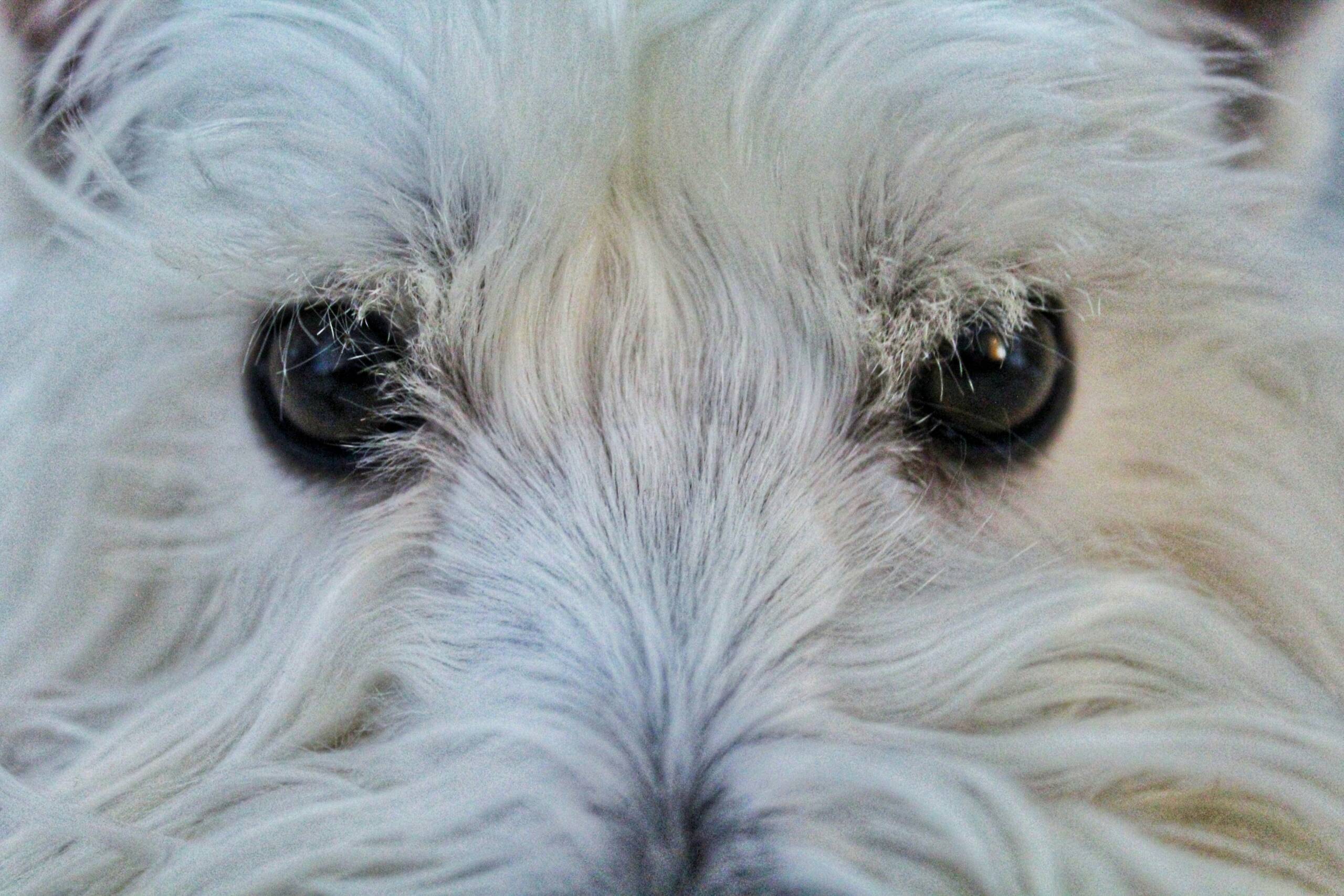
Persistent “goop” that hardens into crusts around the eyelids can be more than just a grooming issue. It often suggests the eye is struggling to stay hydrated or is fighting a chronic irritant.
Common Causes of Goopy Dog Eyes
Several factors can turn a healthy eye into a goopy one:
- Allergies: Environmental triggers like grass, pollen, or household cleaners can cause “allergic conjunctivitis.”
- Conjunctivitis (Pink Eye): Inflammation of the lining of the eye, which can be caused by bacteria, viruses, or irritants.
- Dry Eye (Keratoconjunctivitis Sicca): A condition where the tear glands don’t produce enough fluid, leading to thick, goopy buildup.
- Blocked Tear Ducts: If tears cannot drain properly through the nose, they spill over the face, creating a damp environment for bacteria.
- Foreign Objects: A seed, blade of grass, or even a piece of grit trapped under the eyelid.
- Corneal Ulcers: A scratch on the surface of the eye, which is a painful medical emergency.
Dog Breeds More Prone to Eye Discharge
Anatomy plays a massive role in eye health. Certain breeds are naturally predisposed to goopy eyes:
- Brachycephalic (Flat-faced) Breeds: Pugs, Bulldogs, and Shih Tzus have shallow eye sockets and prominent eyes, making them more susceptible to irritation and drainage issues.
- Long-Haired Breeds: Spaniels and Poodles often have hair that falls into the eyes, causing constant physical irritation.
- Breeds with Loose Skin: Bloodhounds or Mastiffs may have “droopy” eyelids (ectropion) that collect debris more easily.
How to Safely Clean Goopy Dog Eyes at Home
If the discharge is mild and clear, you can manage it with basic hygiene:
- The Tool: Use a soft, clean, damp cloth or specialized veterinary eye wipes.
- The Technique: Gently wipe from the inner corner (near the nose) outward.
- Safety First: Use a separate area of the cloth (or a fresh wipe) for each eye to avoid spreading potential bacteria between them.
- What to Avoid: Never use human eye drops (like Visine) or harsh soaps. These can cause chemical burns on a dog’s sensitive cornea.
When to Worry and When to See the Vet
While you might be tempted to “wait and see,” the eyes are incredibly delicate. Delaying treatment for an infection or a scratch can lead to permanent vision loss or even the loss of the eye.
Watch for these “Red Flags:”
- Colour Shift: Any transition to yellow or green.
- Physical Signs: Redness of the “whites” of the eye, swelling of the eyelids, or a cloudy appearance over the pupil.
- Behavioural Signs: Squinting, holding the eye shut, or obsessively rubbing the face on the carpet.
See a vet immediately if your dog has had a known injury to the eye, if the discharge is accompanied by a change in vision, or if you have a puppy or senior dog whose immune system is less resilient.
Preventing Eye Discharge in Dogs
Prevention is always easier than a cure. You can protect your dog’s vision by:
- Grooming: Keep the hair around the eyes trimmed short.
- Cleanliness: Regularly wash your dog’s bedding to reduce allergens and bacteria.
- Environment: Avoid using strong aerosols or smoking around your pet.
- Checkups: Ensure your vet performs an eye exam during every annual wellness visit.
Not all dog eye discharge is serious; a little morning crust can be normal. But colour and consistency matter: white discharge dogs eye can be mild irritation or dry eye, while green eye discharge dog is more likely to mean infection or significant inflammation that shouldn’t be ignored.
If your dog’s goopy dog eyes are persistent, suddenly worse, or paired with redness, squinting, or pawing, it’s safest to book an exam. Early care protects comfort and helps prevent small eye problems from turning into bigger ones.
FAQs About Goopy Dog Eyes
Why does my dog have goopy eyes every morning?
A little morning crust can be normal “sleep goop,” but it should stay consistent and be easy to wipe away. If it increases or the eye looks red/painful, get it checked.
Is green eye discharge in dogs an emergency?
It can be urgent because green/yellow discharge often suggests infection or significant inflammation, especially with squinting or redness. It’s best to contact your vet promptly.
Can allergies cause white eye discharge?
Yes, allergies and irritants can cause watery eyes and mucus. But similar signs can also happen with dry eye or irritation, so persistent symptoms deserve a vet visit.
Should I use human eye drops on my dog?
Not unless your vet tells you to. Some human eye drops can be harmful or simply the wrong choice for what’s happening in your dog’s eye.
How often should I clean my dog’s eyes?
As needed. Some dogs only need occasional wiping; tear-prone dogs may benefit from gentle daily cleaning to prevent buildup and staining.
Can diet affect eye health in dogs?
Diet can influence overall health (including skin/allergy flare-ups in some dogs), but eye discharge is most often tied to irritation, infection, tear drainage, or dry eye, so it’s better to treat the real cause instead of relying on diet changes alone.