Is your dog acting weird and feeling sad or unwell? This situation is common for many homeowners. The issue is that finding out the cause is difficult. In such situations, ultrasound can be a solution, giving you insights that can be extremely helpful.
Your dog cannot talk and tell you directly what’s wrong with it. Ultrasound is like a way to “hear” what your dog will not tell you. Let’s discuss how a dog ultrasound works and its diagnoses.
What is an Ultrasound for Dogs?
Simply put, a dog ultrasound, also known as a canine ultrasound or sonogram for dogs, is a way to see inside your dog without surgery. It uses sound waves to create real-time pictures of their internal organs, much like the ultrasounds used during human pregnancies.
Unlike X-rays, ultrasounds use sound waves, not radiation. These waves are sent into the body and bounce back off the organs. A special machine picks up these echoes and turns them into images on a screen. This helps vets see the size, shape, and structure of organs, and spot any problems with great accuracy.
Ultrasound vs. X-Ray: What’s the Difference?
Both X-rays and ultrasounds are important, but they show different things. X-rays are great for seeing bones and finding foreign objects. However, they don’t give much detail when it comes to soft tissues like internal organs. X-rays shine when it comes to checking for broken bones or arthritis.
Ultrasounds, on the other hand, are fantastic for soft tissues. They can image the liver, kidneys, spleen, bladder, heart, and even the female reproductive system. This makes them essential for diagnosing many health problems that X-rays might miss. Think of X-rays showing the skeleton, while ultrasounds reveal what’s happening inside. For example, an ultrasound can pick up subtle changes in the liver texture, possibly the earliest sign of liver disease, while an X-ray might only show that it’s enlarged, if that.
When Might Your Dog Need an Ultrasound?
There are tons of reasons why a vet might suggest a canine ultrasound. Here are some common ones:
- Stomach Troubles: If your dog is vomiting, has diarrhea, seems uncomfortable in the abdomen, or has lost their appetite, an ultrasound can help find the cause. It can spot tumours, infections, blockages, or other issues in the organs. For example, it can tell the difference between an inflamed bowel and intestinal cancer, so the vet knows how to treat it.
- Heart Check-Up: A special kind of ultrasound, called echocardiography, checks how well the heart is working. It helps find valve problems, enlarged heart chambers, and other heart issues. It’s key for diagnosing conditions like dilated cardiomyopathy or mitral valve disease, which are common in some breeds. Plus, a Doppler ultrasound can measure blood flow, showing how serious the heart disease is.
- Confirming Pregnancy: Ultrasound is a reliable way to confirm if your dog is pregnant and check on the puppies’ health and development. This is usually done around 25-30 days after breeding. Vets can estimate how many puppies to expect and spot any potential problems during that time.
- Urinary Tract Issues: If your dog is having trouble peeing, has blood in their urine, or gets frequent urinary tract infections, an ultrasound can check for bladder stones, tumours, or other problems. It can even tell what kind of bladder stones are present and how inflamed the bladder wall is.
- Guiding Biopsies: Sometimes, ultrasound helps guide a needle to take a tissue sample. This lets the vet get a sample from a specific spot for testing. It’s really helpful for checking out masses or other abnormalities found during the ultrasound. This will yield a definitive diagnosis.
- Fluid Buildup: If the vet suspects fluid in the abdomen (ascites) or chest (pleural effusion), ultrasound can confirm this and help figure out why. It can determine what kind of fluid is present, whether transudate, exudate, or blood, each suggesting different underlying issues.
- Enlarged Organs: If a vet feels enlarged organs during an exam, an ultrasound can help figure out why. It allows them to see the organ’s inside structure for masses, cysts, or texture changes, helping them pinpoint the reason for the enlargement.
If your dog has any of these symptoms, or if your vet suspects something might be wrong, a sonogram for dogs might be part of the diagnosis process.
What to Expect During a Dog Ultrasound
Knowing what to expect can make the process easier for you and your furry friend. Here’s a general idea of what happens:
- Prep Work: Usually, the fur in the area being scanned will be shaved so the ultrasound probe can make good contact with the skin. Don’t worry, the hair will grow back. The vet might also ask you to withhold food for a certain time, especially if they’re checking the abdominal organs. This helps reduce gas in the intestines, which can cloud the images. Water is usually fine, unless they’re examining the bladder.
- Getting Comfortable: Your dog will lie on a comfy, padded table, usually on their side or back. They need to stay still so the images are clear. A vet tech or assistant might gently hold your dog, and treats can help keep them calm.
- Gel Time: A clear, water-based gel will be applied to the skin. This helps the sound waves travel between the probe and your dog’s body, making the images clearer.
- Scanning: The vet will move the ultrasound probe over the skin, applying gentle pressure. The probe sends out sound waves that bounce off the internal structures. The machine turns these echoes into a live picture on a screen. The vet will carefully study the images, looking for anything out of the ordinary. They’ll take measurements and save images for later.
- How Long it Takes: The entire examination typically lasts between 20 and 45 minutes, depending on the area being checked and the complexity of the task.
- Afterward: Once the ultrasound for dogs is done, the gel will be wiped off, and your dog can usually go home right away. Depending on what the ultrasound shows, the vet might recommend further tests or treatments.
Most dogs handle ultrasounds well because they’re painless and non-invasive. The key is to keep your dog calm and relaxed during the procedure.
The Benefits of Using Ultrasound for Diagnosis
There are many reasons why a sonogram for dogs is so valuable. It’s a key tool in modern veterinary medicine because:
- No Surgery Needed: Ultrasounds don’t require any cuts or incisions, which means less pain and a faster recovery time for your dog.
- See Things in Real-Time: Ultrasound lets vets see organs moving and working in real-time. This is especially helpful for checking the heart and blood vessels. For instance, it shows how the heart valves are moving and how blood is flowing, which you can’t see with static images like X-rays.
- Great for Soft Tissues: Ultrasound is excellent at imaging soft tissues like the liver, kidneys, spleen, bladder, and heart. This helps diagnose lots of conditions that X-rays might miss.
- No Radiation: Unlike X-rays, ultrasound doesn’t use radiation, making it safer and allowing it to be used more often if needed. This is important for young animals or pregnant pets.
- Fairly Quick: The procedure usually takes just 20 to 45 minutes, which is relatively fast compared to other diagnostic tests. This means your pet spends less time being restrained or sedated.
- Helps with Biopsies: Ultrasound can guide a needle to collect a tissue sample from a specific area for testing. This makes biopsies more accurate and less invasive.
All these benefits make ultrasound a powerful way to diagnose many dog illnesses. The result is faster, more accurate diagnoses, leading to better treatments. The ability to see things in real-time, its non-invasive nature, and its detailed view of soft tissues make it essential in veterinary practice.
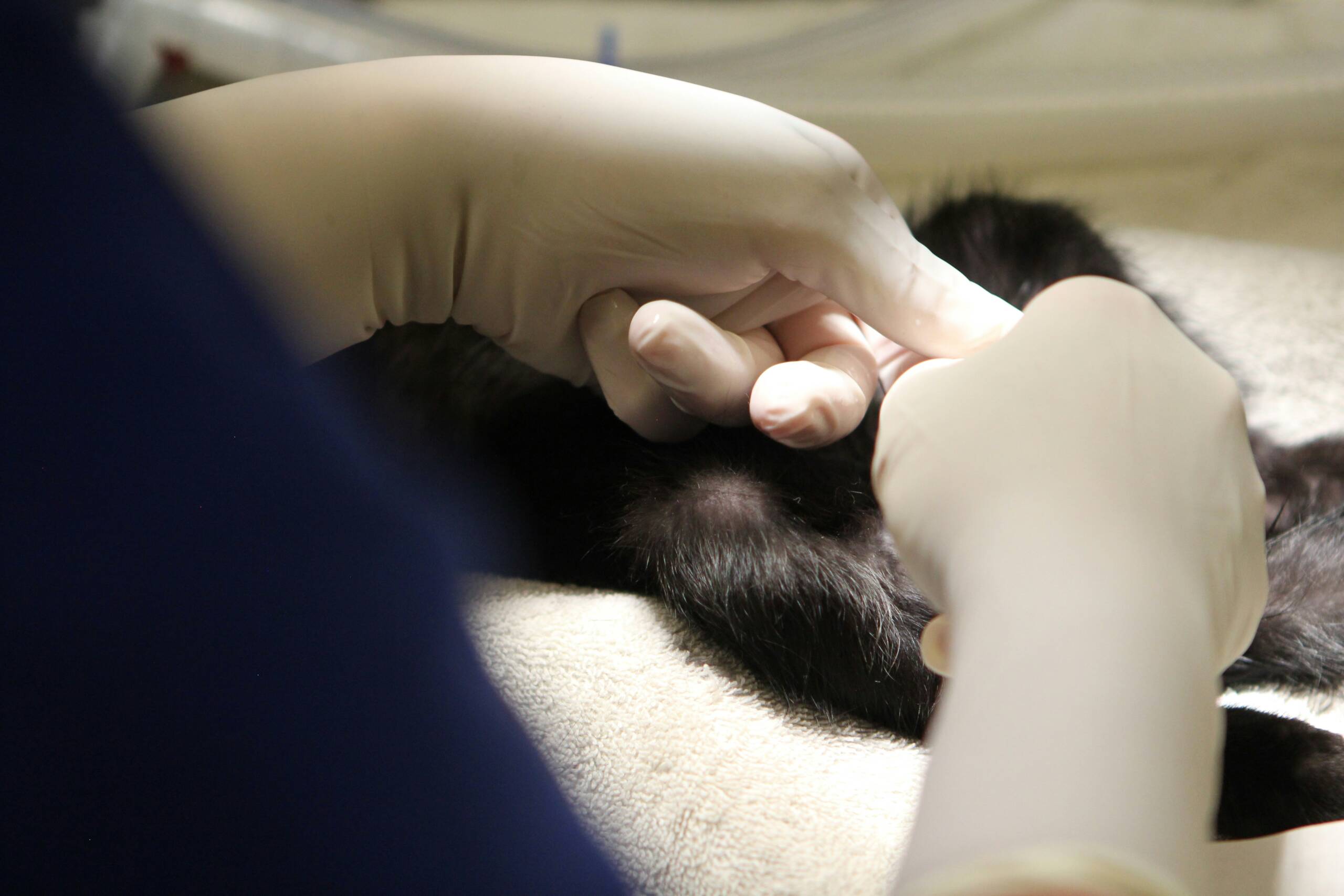
Ultrasound at York Veterinary Hospital
At York Veterinary Hospital, we’re dedicated to giving your pets the best possible care. Our advanced ultrasound equipment and experienced vet team allow us to provide cutting-edge diagnoses for our patients.
We know it’s stressful when your pet is sick. That’s why we do everything we can to make the ultrasound experience as easy and stress-free as possible and encourage our clients to ask questions. Our team will explain the procedure and make sure your dog is comfortable during the examination.
Our vets have extensive training in reading ultrasound images, which is an essential step in the accurate interpretation of dog ultrasounds. We’ll work closely with you to create a treatment plan that’s customized to your dog’s specific needs.
Ultrasound for dogs is a game-changing diagnostic tool that plays a critical role in today’s veterinary medicine. Giving vets detailed images of internal organs helps them diagnose a wide range of problems, from abdominal issues to heart problems and confirms pregnancy.
If your vet recommends a canine ultrasound for your dog, don’t hesitate to ask questions and share any concerns you have. Understanding the procedure and its benefits can ease your worries and ensure a smooth experience for your furry friend.