Most dog owners know they should trim their dog’s nails. Most also dread doing it. The risk of hitting the quick, the squirming, the sound of the clippers: it is enough to make many people put it off indefinitely, or hand the job to a professional every single time.
But nail trimming is a routine part of keeping your dog comfortable and healthy, and with the right technique and a little patience, it is something most owners can handle at home. This guide walks you through everything: why it matters, which tool to choose, exactly how to do it, and what to do when things go sideways.
Prefer to leave it to a professional?
Schedule your appointment quickly and easily.
Why Long Nails Are a Real Health Problem
It is easy to think of long nails as a cosmetic issue. They are not.
When a dog’s nails grow past the point where they can clear the floor, they make contact with the ground before the paw pad does. That shifts your dog’s weight backward, forces the toes to splay, and creates constant low-grade pressure on the toe joints. Over months and years, this unnatural posture contributes to joint pain, reduced traction, and in severe cases, permanent changes to the feet and legs. Older dogs and breeds already prone to joint problems are especially vulnerable.
The dewclaw, located on the inner side of each front leg, carries its own risk. Because it never touches the ground, it gets no natural wear at all. Left untrimmed, a dewclaw can curve and grow directly into the toe pad, which is painful and requires veterinary attention.
The practical test is simple: if you can hear your dog’s nails clicking on a hard floor, they are already too long.
How to Know When It Is Time for a Trim
For most dogs, nails need attention every three to four weeks. That said, it depends on your dog’s lifestyle. A dog that walks daily on concrete or pavement gets a degree of natural filing from the rough surface and may stretch to five or six weeks between trims. A dog that spends most of its time indoors or on grass gets none of that wear and will likely need trimming on the shorter end of that range.
In Toronto, where most dogs exercise in parks and on grass rather than paved surfaces, nails tend to grow faster in practical terms. If you are not sure, check weekly: if the nail extends past the bottom of the paw pad, it is time.
One more reason to trim regularly: frequent trimming causes the quick (the blood vessel inside the nail) to recede toward the base over time. That makes future trims easier and reduces the chance of an accidental nick.
Choosing Your Tool: Clippers vs. Grinders
There is no single right answer here. The best tool is the one your dog tolerates and you feel confident using.
Scissor-style clippers work like a pair of shears. They give you good visibility and work well on small to medium dogs with thinner nails.
Guillotine-style clippers have a hole you insert the nail into; squeezing the handle brings a blade across. Many veterinarians and technicians consider these the easiest to control on most dogs.
Nail grinders use a rotating tip to file the nail down gradually rather than cutting it. They are a good choice for beginners, for dogs with dark nails (where the quick is harder to see), and for owners who want a smoother finish. The trade-off is noise and vibration, which some dogs find more stressful than a quick clip.
Whichever tool you choose, keep one thing nearby before you start: styptic powder. It stops nail bleeding within seconds if you catch the quick. Cornstarch or a dry bar of soap works in a pinch, but styptic powder is worth having in your grooming kit.
Step-by-Step: How to Trim Your Dog’s Nails
Before you start, spend a few minutes letting your dog sniff the tool. Offer treats. For a dog that has never had its nails trimmed, or one that resists, it is worth doing a few short sessions just to introduce the equipment before you attempt an actual trim. Starting with one or two nails and stopping on a calm note is always better than pushing through the whole paw while your dog is anxious.
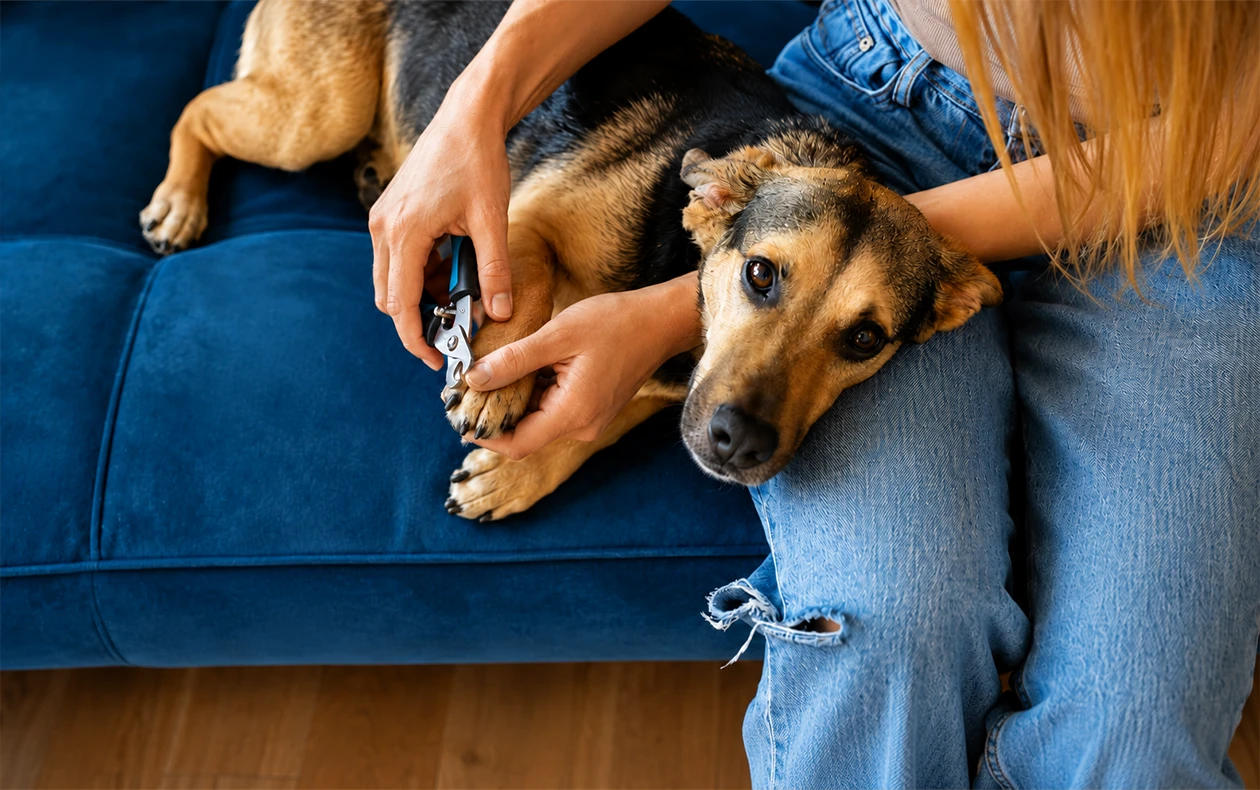
Step 1: Get a secure, comfortable position. Have your dog sit or lie beside you. Drape your non-clipping arm gently over the dog’s body to keep them still. For small dogs, you can place them on a table or in your lap.
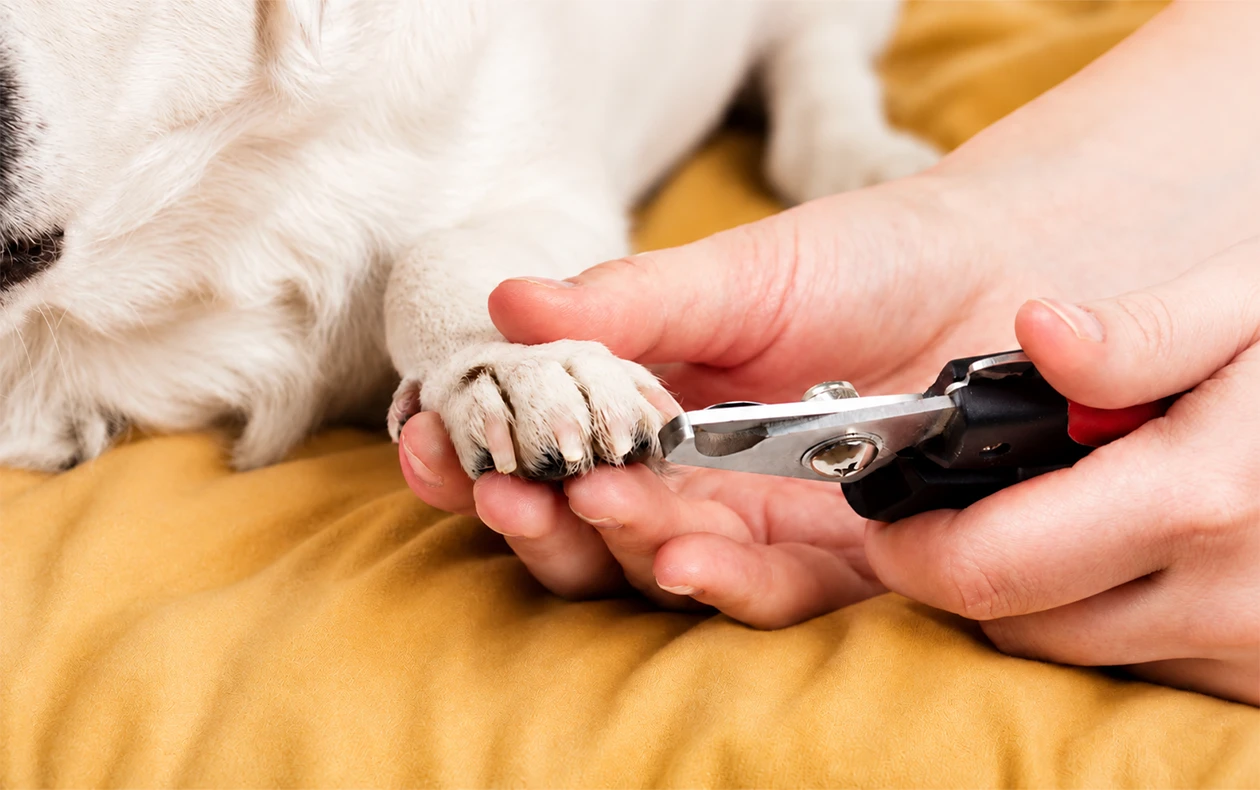
Step 2: Extend the nail. Hold the paw firmly but without squeezing. Place your thumb on the pad of one toe and your forefinger on the top of the toe above the nail. Push your thumb gently upward and backward on the pad while pushing your forefinger forward. This extends the nail and gives you a clear view.
Step 3: Clip only the tip. Cut straight across the end of the nail, taking off just the curved tip. Do not follow the curve of the nail inward, as that is where you risk the quick. Smaller, more frequent cuts are always safer than one large clip.
For white or light-coloured nails: the quick is visible as a pink area inside the nail. Stay clearly on the other side of it.
For dark or black nails: you cannot see the quick directly. Cut in small increments, looking at the cut surface after each pass. When a grey or pinkish oval begins to appear in the centre of the cut surface, stop. That means you are nearing the quick.
Step 4: Do not forget the dewclaws. Check the inner side of each front paw. Dewclaws do not touch the ground and do not wear naturally, so they often need more frequent attention than the other nails. Bend the dewclaw gently away from the leg and trim the tip with a scissor-style clipper.
Step 5: Reward generously and repeat. Treats after each paw, or even after each nail if your dog is nervous, make a real difference over time. The goal is for nail trimming to become a neutral or even positive routine, not something your dog braces for.
What to Do If You Cut the Quick
It happens to careful owners too. Stay calm. Your dog will read your reaction, and a panicked response makes things worse.
Apply styptic powder immediately. Press a small amount firmly against the nail tip and hold it there for a few seconds. The bleeding usually stops within a minute. If you do not have styptic powder, press the nail tip against a dry bar of soap or dab it into cornstarch. These work more slowly but do work.
Without any of these, light pressure with a clean cloth for five minutes will usually stop bleeding on its own.
If bleeding does not stop after 20 to 30 minutes, contact your veterinarian. Dogs on blood-thinning medications, or those with certain health conditions, may not clot normally, and prolonged bleeding from a nail is worth a call.
Tips for Dogs Who Resist Nail Trims
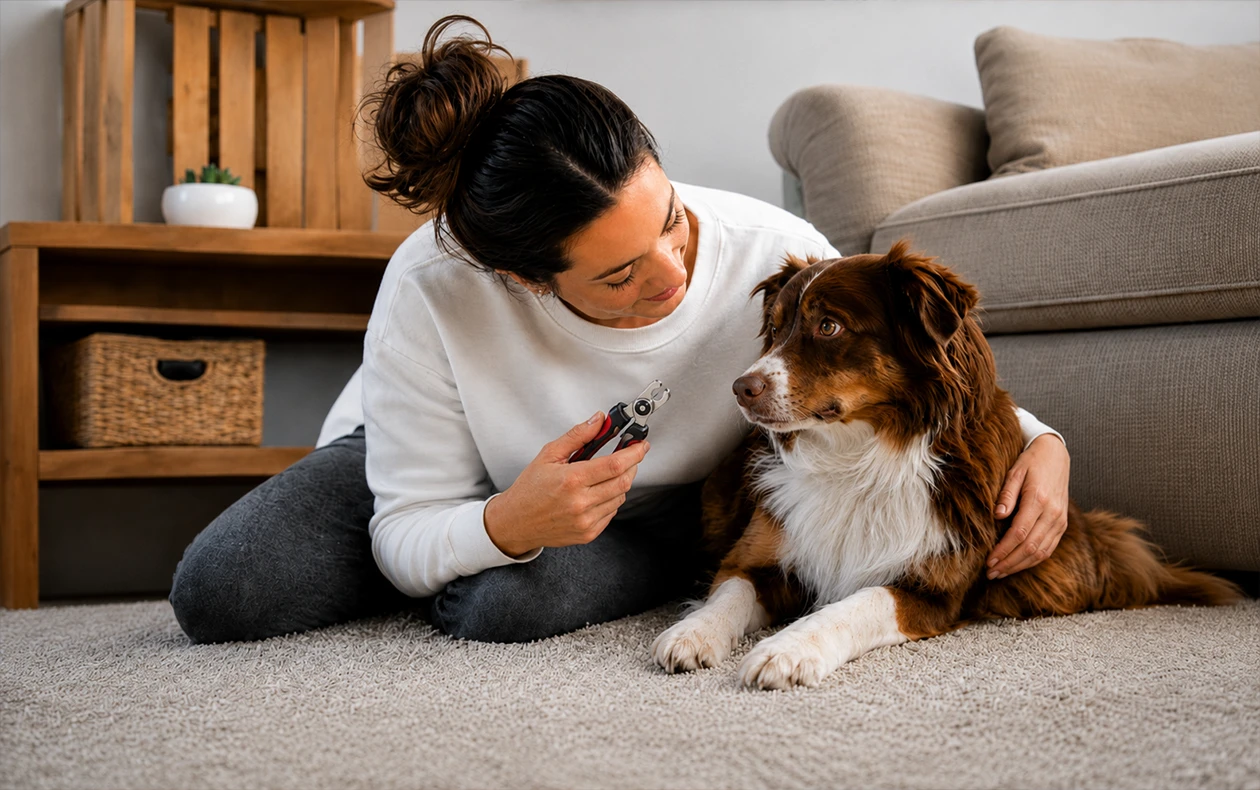
Some dogs resist because their nails were cut too short at some point, and they remember it. Others are simply sensitive about their feet. Either way, the approach is the same: go slowly, keep sessions short, and build positive associations over time.
Introduce the tool before you use it. Let your dog sniff the clippers or grinder. Touch the tool lightly against each paw without trimming, then offer a treat. Do this over several sessions before attempting an actual clip.
Use distraction. Spreading a little peanut butter on a silicone mat at floor or table height gives your dog something to focus on while you work. It is a small thing that makes a real difference for many dogs.
Do one nail at a time if you need to. No rule says you have to do all four paws in one sitting. One nail today, three tomorrow. If that is what keeps things calm and positive, it is the right approach.
For dogs with extreme nail anxiety, professional nail trims at York Veterinary Hospital offer an important advantage: veterinary supervision is on-site, and the team is experienced in handling anxious and resistant dogs calmly. If home trimming consistently causes distress for you or your dog, professional care is a reasonable and practical solution, not a last resort.
A Note on Frequency and the Long Game
The most common mistake owners make with nail care is not the technique. It is the gap between trims. Nails that are left for two or three months become harder to manage, and the quick grows longer with them, reducing the amount you can safely take off in one session.
The path to easy nail trims is consistent, with short sessions every three to four weeks. Over time, your dog becomes accustomed to the process, the quick recedes, and what once felt like a production becomes a routine ten-minute task.
If home trimming is not working for you or your dog, a professional trim is always a reasonable choice at York Veterinary Hospital.
Frequently Asked Questions
How often should I trim my dog’s nails? Most dogs need a trim every three to four weeks. Dogs that walk regularly on concrete may stretch to five or six weeks; those that spend most of their time on soft surfaces or grass will need trims closer to the three-week mark. A reliable guide: if the nail extends past the bottom of the paw pad, it is time.
What happens if I cut the quick? Apply styptic powder immediately, pressing it firmly against the nail tip for a few seconds. Bleeding usually stops within a minute. If you do not have styptic powder, cornstarch or a dry bar of soap work in a pinch. Contact your veterinarian if bleeding does not stop after 20 to 30 minutes.
Is nail grinding better than clipping? Neither is objectively better. Grinders produce a smoother finish and are helpful for dogs with dark nails, but some dogs find the noise and vibration stressful. Clippers are faster and quieter. The best tool is the one your dog tolerates and you feel confident using.
When should I have a professional trim my dog’s nails? Professional trims are a practical option any time home trimming causes consistent stress for you or your dog, or when nails have grown long enough that a more gradual approach is safer. Nail trims are part of our grooming services at York Veterinary Hospital.
Book a Professional Nail Trim at York Veterinary Hospital
Schedule your appointment quickly and easily.