
Lepto Vaccine for Dogs: Why Your Toronto Vet Recommends It
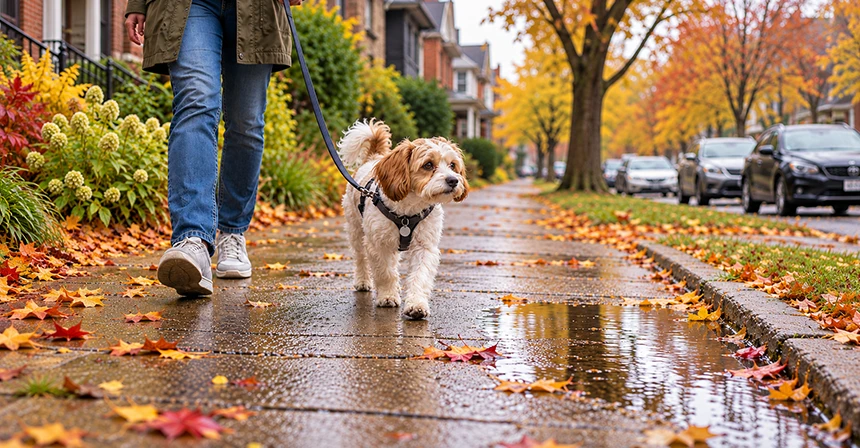
Leptospirosis has a reputation as a country dog’s problem. Across a decade of Canadian testing, dogs at urban practices came back positive slightly more often than dogs at rural ones, and of all the breed groups, it was the toy breeds that carried the highest odds. The picture most owners have in mind, a large dog swimming in a farm pond, is not the dog most at risk here.
That is a large part of why the vaccine has moved onto the core list, and why we recommend it for every dog at York Veterinary Hospital.
It is also the vaccine owners question most, usually because they have heard it causes reactions. That concern has real numbers behind it, and they are set out below alongside everything else.
What leptospirosis is
Leptospira are bacteria carried in the urine of infected animals. In a city, that means rats and raccoons above all, along with skunks, opossums and muskrats. An infected animal sheds the bacteria as it urinates, and the organism survives in wet soil and standing water for weeks.
A dog picks it up by drinking from a puddle, licking wet ground, walking through contaminated soil and later licking their paws, or through a cut or a mucous membrane. Incubation runs four to twenty days, with clinical signs commonly appearing within two weeks.
Leptospirosis attacks the kidneys and the liver. Early signs are vague enough to be missed: fever, lethargy, poor appetite, vomiting, increased drinking and urinating, sometimes muscle pain or a reluctance to move. It can progress to kidney failure, liver failure, bleeding into the lungs, and death. Our guide to a lethargic dog covers how easily the early picture is mistaken for something minor.
Why it changed from non-core to core
For years the leptospirosis vaccine sat in the lifestyle category, recommended for dogs judged to be at risk. AAHA changed that designation, and the guidelines now list leptospirosis under core vaccines, recommended for all dogs irrespective of lifestyle.
Cases kept appearing in dogs nobody would have classified as at risk, including in places where the disease had not been expected, and the risk assessment that was supposed to sort at-risk dogs from the rest was not doing its job. AAHA’s position is that exposure is possible for any dog who spends time outside, whether that means a city sidewalk or a farm lane.
WSAVA reaches the same conclusion by a different route. Its guidance is that where the disease is endemic, where the relevant serogroups are known, and where suitable vaccines exist, leptospirosis vaccination should be considered core. Southern Ontario meets all three conditions.
We agree with the change, and our reason is local: we see positive cases in Ontario, and the disease passes to people.
The Ontario picture
A peer-reviewed Canadian study covering 2009 to 2018 examined more than 10,000 tests. Ontario’s test-positive proportion was 9.6 per cent, against 8.4 per cent nationally. Ontario accounted for nearly two-thirds of all tests run in the country.
Three findings from that study run against the folk wisdom. Here they are with their odds ratios, because the direction alone tells you very little.
Toy breeds carried the highest odds of any breed group, at 3.3 times the odds of the sporting group (95% confidence interval 2.5 to 4.4). Mixed breeds and terriers were next. The small dog on a downtown sidewalk sits at the centre of this risk.
Dogs at urban practices had higher odds than dogs at rural ones, at 1.3 times (1.0 to 1.8). That is the weakest of the three findings, and the lower bound touches 1.0, so treat it as evidence that city life is not protective, not as proof that it is worse.
Dogs under a year old carried roughly twice the odds, and male dogs were also raised.
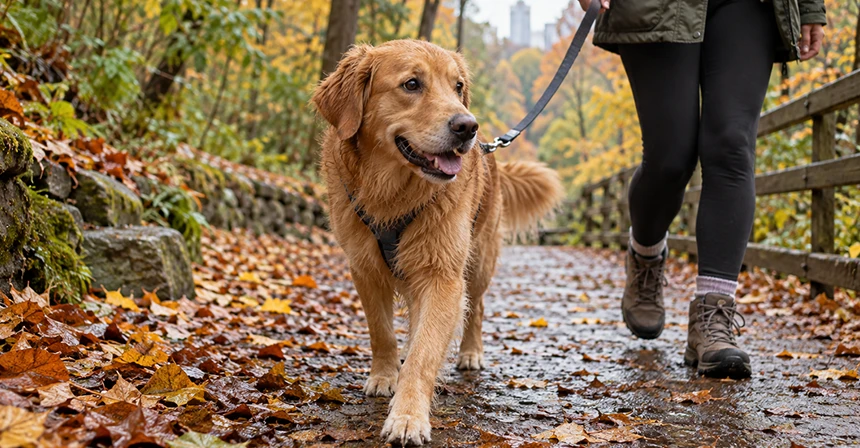
There is also a season. Positivity in Ontario runs below 10 per cent from January through August, then climbs sharply from September into December. Autumn, in other words: leaf litter, rain, standing water in laneways and parks, and a raccoon population that has spent the summer breeding.
The University of Guelph’s Animal Health Laboratory reported that canine submissions increased by approximately 50 per cent in 2024 with a moderate increase in the proportion testing positive. Some of that reflects more testing, so read it as a signal and not a measurement.
Where the exposure comes from in Toronto
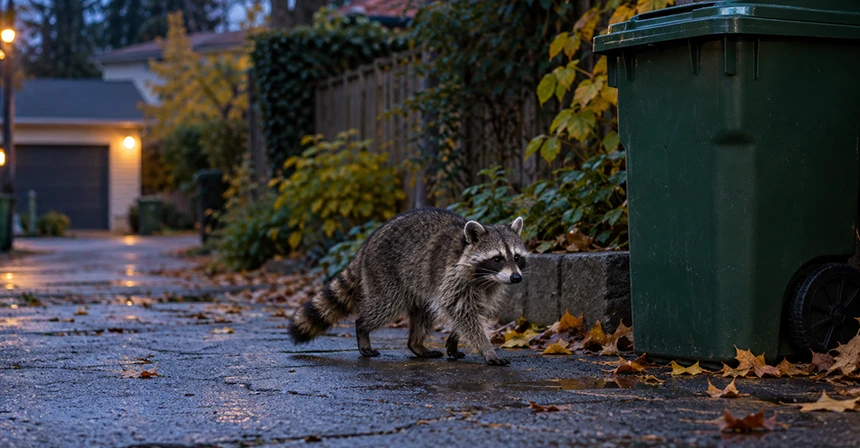
Toronto has one of the densest urban raccoon populations in North America. Add rats displaced by construction, green bins, ravine trails through the Don and the Humber, and the ordinary puddles of a wet autumn, and the exposure picture assembles itself.
The bacteria survive for weeks in urine-soaked soil. Your dog does not need to swim in anything. A raccoon crossed your backyard in the night and your dog sniffed the grass in the morning. That is exposure.
The patch of grass beside a condo building counts too. Wildlife visits it as readily as it visits a backyard.
It passes to people
Leptospirosis is zoonotic. Humans are infected through contact with infected urine or blood, usually via a mucous membrane or broken skin.
The AVMA puts it at the right calibration: an infected dog is unlikely to infect you and your family, but there is some risk. Two practical points follow from it. An untreated infected dog can shed bacteria in their urine for months while appearing to have recovered. And once appropriate antibiotic treatment has been running for 48 hours, contact precautions can generally be lifted.
If your dog is diagnosed, we will go through the household precautions with you: gloves for handling urine, prompt clean-up with a dilute bleach solution, and hand washing. They matter most if anyone at home is pregnant, elderly or immunocompromised.
There is a second reason the vaccine belongs in this conversation. AAHA states that newer vaccines have been documented to dramatically reduce or prevent renal carriage and urinary shedding of leptospires from exposed dogs. A vaccinated dog who is exposed is therefore less likely to become the thing that infects the household. That is an argument for the vaccine that has nothing to do with whether your own dog falls ill.
The vaccine schedule
The vaccine is a bacterin, meaning it is made from killed bacteria rather than a weakened live organism. It covers four serovars: Canicola, Icterohaemorrhagiae, Pomona and Grippotyphosa.
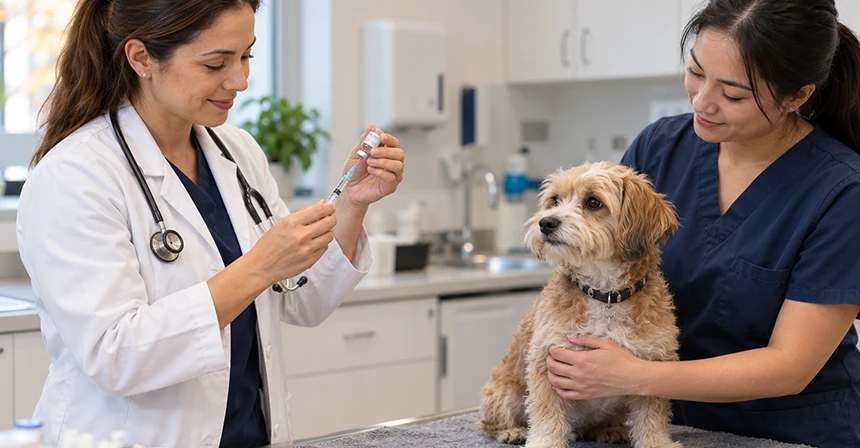
Two doses to start, with two to four weeks between them. This is the step owners most often miss. One dose is not a course. A dog who gets the first injection and never comes back for the second is not protected.
The first dose at twelve weeks of age or later. We do not give it earlier. For toy breeds and very young puppies, we split the vaccines across visits and start leptospirosis at fourteen weeks, with the booster a month after the first dose. Our puppy and kitten care page covers the whole first year.
Annual boosters after that. AAHA puts the demonstrated duration of immunity at twelve to eighteen months depending on the serovar. That is why the interval is yearly while the core viral vaccines move to three years. The protection runs out sooner.
The vaccine covers four serovars out of more than 250 described worldwide, and immunity is largely serovar-specific, so this is partial protection against the strains that make dogs ill here.
The reaction question, with the actual numbers
The leptospirosis vaccine has a reputation for causing reactions. The reputation came from older whole-cell products with high extraneous protein content. Current formulations are cleaner, and there is good data on what they do.
The largest study covered 130,557 dogs across 249,880 vaccine administrations. Dogs receiving a *Leptospira* vaccine had 53.0 owner-reported adverse events per 10,000, against 22.1 per 10,000 for dogs who did not. That is roughly 2.4 times the rate, and the events counted were mostly minor: soreness, a quiet day, mild facial swelling.
The figure that matters more sits inside the same study. Hypersensitivity reactions, the serious category, ran at 8.5 per 10,000 in the *Leptospira* group against 6.2 in the other, and that difference was not statistically significant. No dog in the study died from a hypersensitivity reaction.
Risk is concentrated in the very small and the very young. A separate study of adverse events after canine vaccination put dogs of 5 kg and under at about four and a half times the odds of dogs over 45 kg, across all vaccines rather than leptospirosis alone. AAHA’s own summary is that adverse reactions of any type are more likely in smaller and younger dogs.
Which leaves a real tension. Toy breeds are both the group with the highest odds of leptospirosis in Ontario and the group most likely to react to a vaccine. Both of those are true at once. What we can say is that roughly four in five of the reactions recorded were in the minor and temporary category, that no dog in that study died from one, and that untreated leptospirosis kills dogs. The protocol is where the smaller risk gets managed: first dose at twelve weeks or later, vaccines split across visits for small dogs, and a short wait at the hospital afterward.
If your dog has had a reaction to a vaccine before, tell us, and we will plan the next one around it.
If it is caught, what happens
Treatment means an antibiotic course alongside supportive care. Doxycycline is the usual choice, given for several weeks, and a dog who is vomiting or dehydrated will need intravenous fluids too. Bloodwork and urinalysis are what make the diagnosis, and they also show how much the kidneys and liver have been affected, which is what the prognosis turns on.
A dog caught early, before the kidneys are in trouble, generally does well. A dog who arrives already in kidney or liver failure has a much harder course, and some of those dogs do not recover. That gap is why we push both the vaccine and the early phone call, instead of waiting out a quiet, off-colour day.
Finishing the full antibiotic course matters for the same reason the household precautions do. A dog who is treated incompletely can keep shedding.
Frequently asked questions
My dog missed the second dose. Do we start again?
Bring them in and we will look at where the schedule stands. What happens next depends on how long the gap has been and whether your dog is a puppy still building immunity or an adult with previous years of cover behind them, so it is a question we answer with the record in front of us rather than a general rule.
My previous vet said my dog did not need it. Who is right?
Both positions were reasonable at different times. Leptospirosis sat in the lifestyle category for years and a risk assessment decided it case by case. AAHA’s position now is that the risk assessment was not reliably identifying the dogs who went on to get sick, so the recommendation applies to all dogs. It is a change in the guidance, not a criticism of the earlier advice.
My dog only goes out on a leash in the city. Do they still need it?
Yes. Exposure comes from raccoon and rat urine in soil and standing water, and a leashed walk in this part of Toronto passes through both constantly. The Canadian data has urban dogs at slightly higher odds than rural ones, and toy breeds highest of all the breed groups.
What are the signs I should watch for?
Fever, lethargy, loss of appetite, vomiting, drinking and urinating more than usual, muscle soreness or reluctance to move, and in later stages yellowing of the gums or eyes. None of those are specific to leptospirosis, which is the difficulty, so bloodwork is what separates it from the alternatives and our in-house laboratory returns most results the same day. If your dog is unwell and has been near standing water or wildlife, say so when you call. It changes what we test for.
My dog is acutely unwell right now. What do I do?
Call us. Outside our regular appointment hours, our emergency and urgent care page sets out how that works. Leptospirosis is treatable and the outcome depends heavily on how early it is caught.
Book a vaccination appointment