

Your dog has been scratching for weeks. You have read enough to suspect the food, and the pet store aisle is full of bags with the word hypoallergenic on them.
Two things before you buy one. Most itchy dogs do not have a food allergy. And of the dogs who do, most will not be helped by a bag chosen off a shelf.
Hypoallergenic diets are the right answer for the dogs who need them. The work is finding out whether your dog is one of them.
Food allergy, food intolerance, and the itch that is neither
Three different things get called a food allergy.
A true food allergy is an immune reaction to a protein in the diet. It usually shows up as itchy skin, recurrent ear infections, or both, and sometimes as gastrointestinal signs. It does not come and go with the seasons.
A food intolerance is a digestive problem, not an immune one. Loose stool, gas, vomiting after a particular food. Unpleasant, but a different mechanism.
Environmental allergy is the itch most dogs turn out to have. Pollen, dust mites, mould. It typically has a seasonal pattern, though in a dog who reacts to indoor allergens it may not.
And then there are fleas, which are easy to rule out too early. You will not usually see them, and a flea-allergic dog can react to a very small number of bites.
The Tufts Cummings School clinical nutrition service is blunt about the order of investigation: fleas and environmental allergy account for far more itchy dogs than food does. Any secondary skin or ear infection needs treating too, because an infected ear will keep itching no matter what is in the bowl.
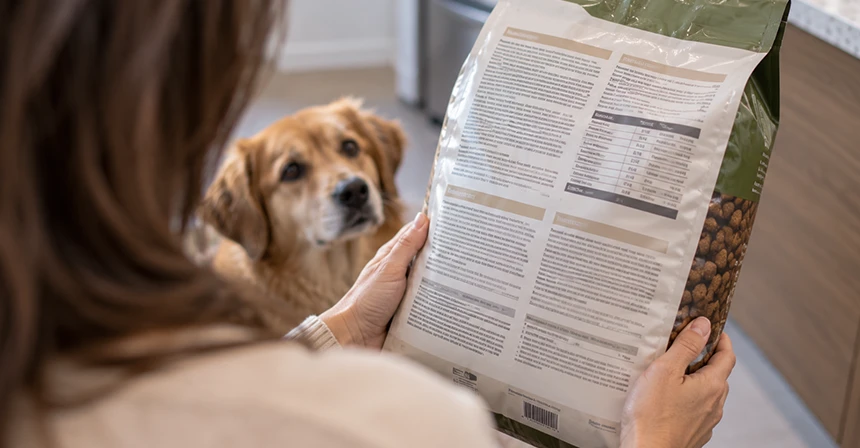
What “hypoallergenic” means on a label
As a regulated term, nothing. There is no AAFCO or CFIA standard a food has to meet before it can print the word on the bag, and no legal definition of what counts. A manufacturer can use it because the recipe has fewer ingredients than their last one.
In veterinary use the word points at four different things, and the distinctions matter more than the label does.
Limited ingredient diets contain a shorter ingredient list. That is a formulation choice, not a clinical one, and it says nothing about whether the proteins in it are ones your dog reacts to.
Novel protein diets are built around a protein the individual dog has never eaten. Whether a given diet is novel depends entirely on that dog’s history, so venison is novel for one patient and useless for the next.
Hydrolyzed protein diets take a protein and break it into fragments small enough that the immune system does not recognize it. Extensively hydrolyzed products break it down further than partially hydrolyzed ones, which matters for a reason covered below.
Elemental diets skip intact protein altogether and supply amino acids. They are the strictest option and the least palatable, and they are used when the others have failed.
Only the last three are diagnostic tools. The first is a marketing category, and it is the one owners most often spend eight weeks on by mistake.
Which ingredients actually cause it
A review of 297 dogs with confirmed food allergy pooled the published cases and ranked the ingredients involved.
| Ingredient | Dogs | Share of cases |
| Beef | 102 | 34% |
| Dairy | 51 | 17% |
| Chicken | 45 | 15% |
| Wheat | 38 | 13% |
| Soy | 18 | 6% |
| Lamb | 14 | 5% |
| Corn | 13 | 4% |
| Egg | 11 | 4% |
| Pork | 7 | 2% |
| Fish | 5 | 2% |
| Rice | 5 | 2% |
The top three are animal proteins. Corn, which has the worst reputation in the pet food aisle, sits at 4 per cent, level with egg and below soy.
The ranking has a simple explanation: these are the top allergens because they have been the most common ingredients in dog food for decades. An allergy requires exposure. The protein your dog has eaten every day for four years is the one they have had the opportunity to react to.
That also explains why lamb, once marketed as the hypoallergenic protein, is now on the list. It was novel until it was popular.
Why the allergy test will not help you
Clients arrive with results from blood, saliva or hair tests bought online. We do not recommend them, because they are not reliable for diagnosing food allergy.
In one study of thirty dogs with no signs of food allergy, at least one assay returned a positive result for every single dog. A separate study of saliva testing found high rates of positive reactions in healthy dogs, including weak positives in around half of them.
A test that flags healthy dogs as allergic cannot tell you whether your dog is. If you have already paid for one, bring the results and we will go through them, but the diagnosis will not come from that sheet of paper.
The only reliable diagnosis: the elimination diet trial
A food allergy is diagnosed by removing the suspect proteins, seeing whether the signs resolve, and then deliberately putting them back to see whether the signs return. That last step is what turns it into a diagnosis.
The diet. Either a hydrolyzed protein diet or a novel protein diet, chosen from the categories above. Which one suits your dog depends entirely on their dietary history, so the first question we ask is what they have been fed over their lifetime, including treats.
The duration. Eight weeks. A trial run for five weeks catches most cases, but sensitivity only passes 90 per cent at around eight weeks for skin signs. Gastrointestinal signs often improve faster. The skin takes its time.
The contamination. This is where trials are lost. For eight weeks, the trial diet is the only thing that goes into your dog. No treats, no table scraps, no dental chews, no rawhide, no flavoured medications, no peanut butter on the toothbrush, nothing from the neighbour. One flavoured monthly preventive can invalidate two months of work.
The rechallenge. If the signs have resolved, you reintroduce the original food. Most dogs with a true food allergy flare quickly, often within the first day or two and the great majority within a week. Give it a fortnight before calling it negative. That flare is the diagnosis. If nothing happens, the food was not the problem, and you have learned something useful.
One limitation to know before you start. Where a diet is only partially hydrolyzed and is made from the very protein the dog reacts to, between 20 and 50 per cent of those dogs still flare on it. That is an argument for the extensively hydrolyzed products rather than against the method, and it is one of the things we weigh when choosing which diet to put your dog on.
Why the bag from the pet store usually fails
You can buy a limited ingredient or hypoallergenic food off the shelf without going through a veterinarian. It is the easier route, and as a diagnostic tool it is close to useless.
The problem is what is in it. A review of the testing done on commercial pet foods found a median mislabelling rate of 45 per cent. Among foods marketed with novel or limited ingredients, between 33 and 83 per cent contained ingredients not declared on the label. In one study of 29 over-the-counter foods, 65 per cent contained chicken DNA the label did not mention, and 41 per cent contained pork.
The same review found something that cuts the other way, and it is the reason the veterinary therapeutic diets exist. Across six studies of products containing hydrolyzed protein, only one instance of possible mislabelling was found.
Cross-contamination during manufacturing explains most of it. A production line that ran chicken before it ran duck leaves traces, and traces are enough for a dog with a food allergy. The one variable in an eight-week trial that has to be right is what is in the bowl.
Running the trial without wasting it
Transition over about a week. Mix the new diet into the old in increasing proportions across seven days or so. Going straight across causes loose stool in a lot of dogs, and loose stool at the start of a food trial is impossible to interpret.
The trial diet is also the treat. Set aside a portion of the day’s food in a pocket and use it for training and for the moments a treat is unavoidable. Some of the therapeutic ranges also make a matching biscuit, which we can order in.
Sort the medications out before you start, not after. Flavoured heartworm and flea preventives, flavoured pain relief, chewable supplements and flavoured toothpaste all contain protein. Bring the boxes to the appointment and we will swap anything that needs swapping.
Puppies need a diet formulated for growth. Several of the therapeutic elimination diets are formulated for adult maintenance only, which makes them unsuitable for a growing dog for eight weeks. That narrows the options, so raise it early.
Tell the household and anyone who walks the dog. The trial fails in the moments you are not there, which is usually a well-meaning visitor with a biscuit.
One honest note about the cost. Eight weeks on a therapeutic diet is an expense, and in a multi-dog or multi-child household it is hard to run cleanly. Weigh both up before you begin, not three weeks in.
Grain-free is not hypoallergenic
Marketing welded these two ideas together. Grains are uncommon allergens in dogs. Wheat is at 13 per cent, corn at 4, rice at 2. Beef, dairy and chicken are the problem, and every one of them is in the grain-free food too.
There is a separate question about grain-free diets, and it concerns the heart rather than the skin. The US Food and Drug Administration investigated a possible link with dilated cardiomyopathy, centred on diets high in pulses, which is to say peas, lentils and chickpeas. The same association has turned up in grain-inclusive foods containing pulses. Causation has not been established, the early taurine-deficiency theory has been ruled out as the general explanation, and the FDA’s last public update on the matter was in December 2022. It does not advise against feeding grain-free food, and Health Canada has issued no equivalent warning.
So if your dog is on a grain-free diet and thriving, raise it at your next appointment rather than acting on a headline. And choosing grain-free in the hope of fixing an itch means choosing it for a reason the evidence does not support.
Where York Veterinary Hospital fits
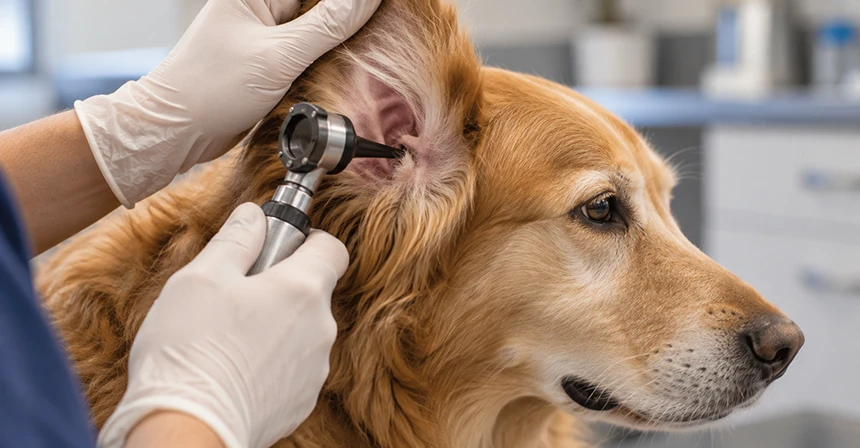
We examine the dog and work out what is causing the itch, which is the step that most often gets skipped. Skin and ear cytology are done in-house, so we can tell you the same day whether there is a bacterial or yeast infection that needs treating before anything else will improve.
We treat the infection, review the flea control, and consider environmental allergy. If the picture points to food, we go through the elimination trial with you and which diet suits your dog’s history.
We do not run supervised elimination diet trials here. Where a case needs that level of supervision we will tell you so and point you to where it is done. For the trials that do not, we can prescribe the therapeutic diets and order them in, and you can reorder through our website once your dog is settled on one.
So: do not start with the bag. Start with the examination.
Frequently asked questions
Can I just do the diet trial myself with a store-bought food?
You can try, and the result will be unreliable. Between a third and four-fifths of diets sold for elimination trials contain undeclared ingredients. Eight weeks of effort deserves a diet whose contents can be relied on.
How long before I see a difference?
Gastrointestinal signs often settle within a few weeks. Skin takes longer, which is why the trial runs the full eight weeks before it can be called. Improving at week four is encouraging and is not yet an answer.
My dog refuses the new food. What now?
Call us before you give up on it. Warming wet food, slowing the transition down, or switching to a different product in the same category usually solves it. What does not work is adding something palatable on top, which ends the trial.
Does any of this apply to cats?
The diagnostic logic is the same and hydrolyzed diets exist for cats. The practical side is different enough to need its own conversation, particularly for a cat who goes outdoors or lives with other cats, and a cat who stops eating is a more urgent problem than a dog who does. Raise it at the appointment.
Is my dog allergic to chicken specifically?
Chicken is the third most common food allergen in dogs, at around 15 per cent of confirmed cases. It is also in an enormous number of foods and treats under names that do not say chicken. Our guide to chicken allergies in dogs goes through the hidden sources and what to feed instead.
What about a home-cooked elimination diet?
It can be done, but it has to be formulated properly, because a home-cooked diet fed for eight weeks that is short on calcium or an essential amino acid causes a problem of its own. This is a conversation to have before you start.
My dog is itchy but the season has just changed. Is it the food?
Possibly not. An itch that arrives with spring pollen or settles after the first frost is pointing at the environment. Food allergy does not follow the calendar. Our guides to dry skin in dogs and hot spots cover the other common causes.